If your radiator feels warm at the top but stays cold at the bottom, you may notice that your room also takes longer to heat. In many cases, this can happen when sludge and debris build up inside the radiator or central heating system.
But that doesn’t automatically mean you need a power flush.
A faulty thermostatic radiator valve (TRV), trapped air, poor balancing or a circulation problem can cause similar symptoms. So before paying for a full system flush, it’s important to find out what’s actually causing the problem.
In this guide, we’ll look at why radiators become cold at the bottom, the signs of sludge in a heating system, when a power flush is needed, what happens during the process, how much power flushing costs in Preston in 2026 and whether it’s worth doing.
Why Is My Radiator Cold at the Bottom?
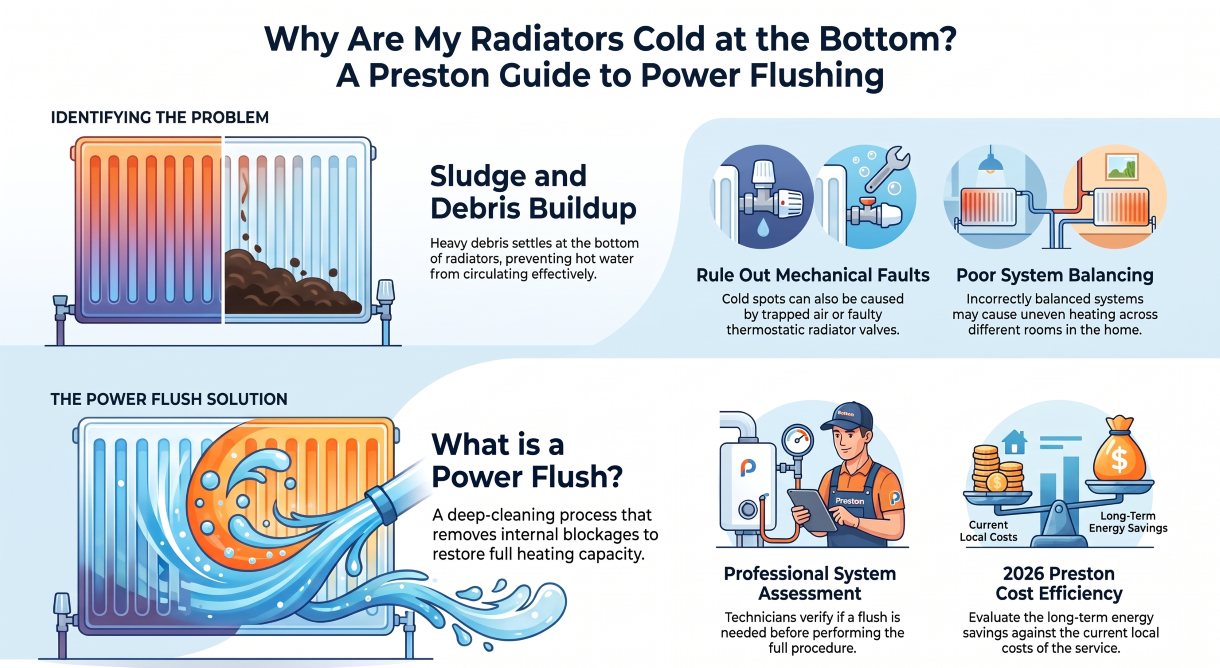
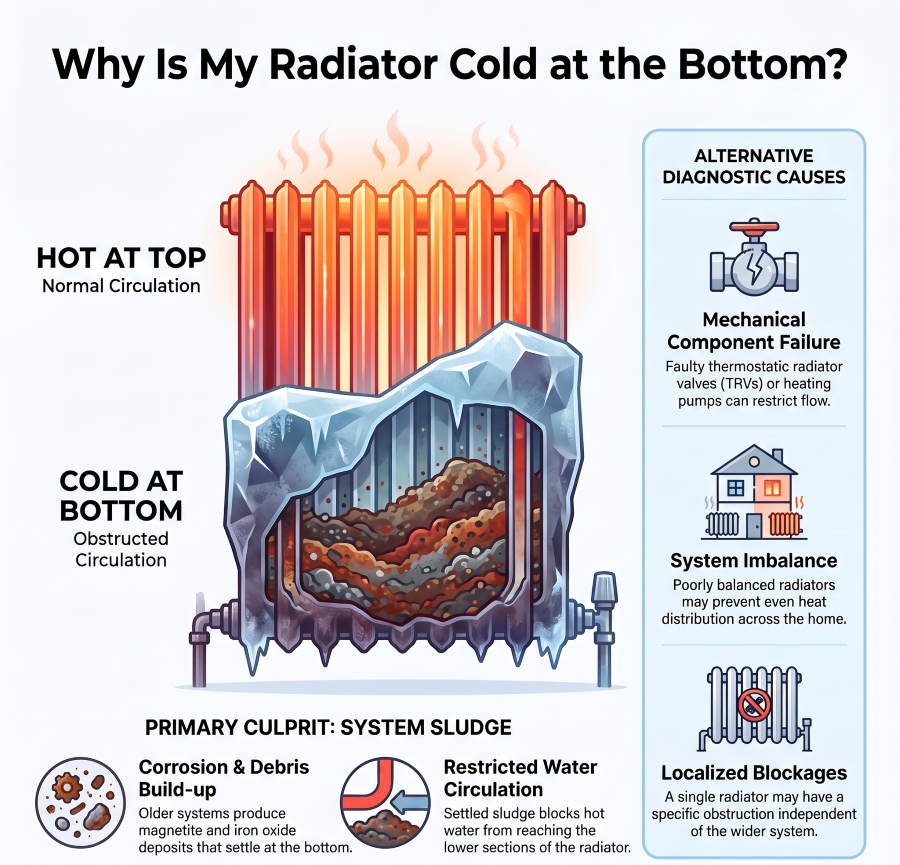
A radiator that is hot at the top but cold at the bottom can indicate sludge or debris in the heating system. Over time, corrosion creates deposits such as magnetite and iron oxide, which can settle inside radiators and restrict hot water flow. This can leave the top warm while the bottom stays cold.Other possible causes include:
Other possible causes include:
- A faulty thermostatic radiator valve (TRV)
- Poorly balanced radiators
- Restricted water circulation
- A problem with the heating pump
- A blockage affecting one radiator
That’s why it’s better to identify the cause first rather than assuming that a power flush is the answer.
Cold at the Top or Cold at the Bottom: What’s the Difference?
Where the radiator is cold can give you a useful first clue.
Radiator cold at the top but warm at the bottom
This is often caused by trapped air. Bleeding the radiator may release the air and allow it to heat properly again.
Radiator warm at the top but cold at the bottom
This can indicate sludge or restricted water circulation. If several radiators have the same problem, the central heating system may need further investigation.
If you’re regularly bleeding radiators but the problem keeps returning, it’s worth having the system checked rather than simply repeating the same fix.
Signs Your Heating System May Need a Power Flush
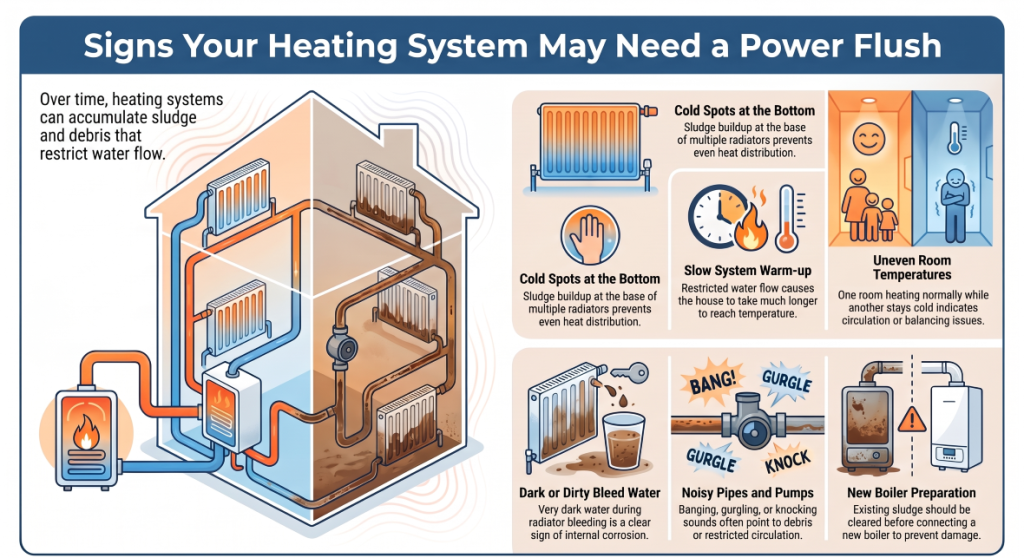
One cold radiator doesn’t necessarily mean you need a power flush. However, if you’re experiencing several of the following problems, it may be worth arranging an assessment.
Several Radiators Have Cold Spots
If more than one radiator is cold at the bottom, sludge or restricted circulation could be affecting the wider heating system.
Your Radiators Take Longer to Heat
Have you noticed that your heating takes much longer to warm the house than it used to?
Restricted water flow caused by sludge or debris can affect how efficiently heat moves around the system.
Some Rooms Are Colder Than Others
If one room heats normally while another stays cold, your radiators may need balancing. However, sludge and circulation problems can also affect heat distribution.
Your Heating System Is Noisy
Banging, knocking, gurgling or unusual noises from radiators, pipes or the circulation pump can sometimes be linked to debris or poor circulation.
There can be other causes too, so noise alone doesn’t necessarily mean you need a power flush.
The Water Is Dark When You Bleed a Radiator
Very dark or dirty water can indicate corrosion products and sludge within the heating system.
You’re Replacing an Older Boiler
If you’re installing a new boiler onto an existing heating system, it’s sensible to check the condition of the radiators and pipework first.
If significant sludge is present, your heating engineer may recommend cleaning the system before connecting the new boiler.
Do I Always Need a Power Flush?
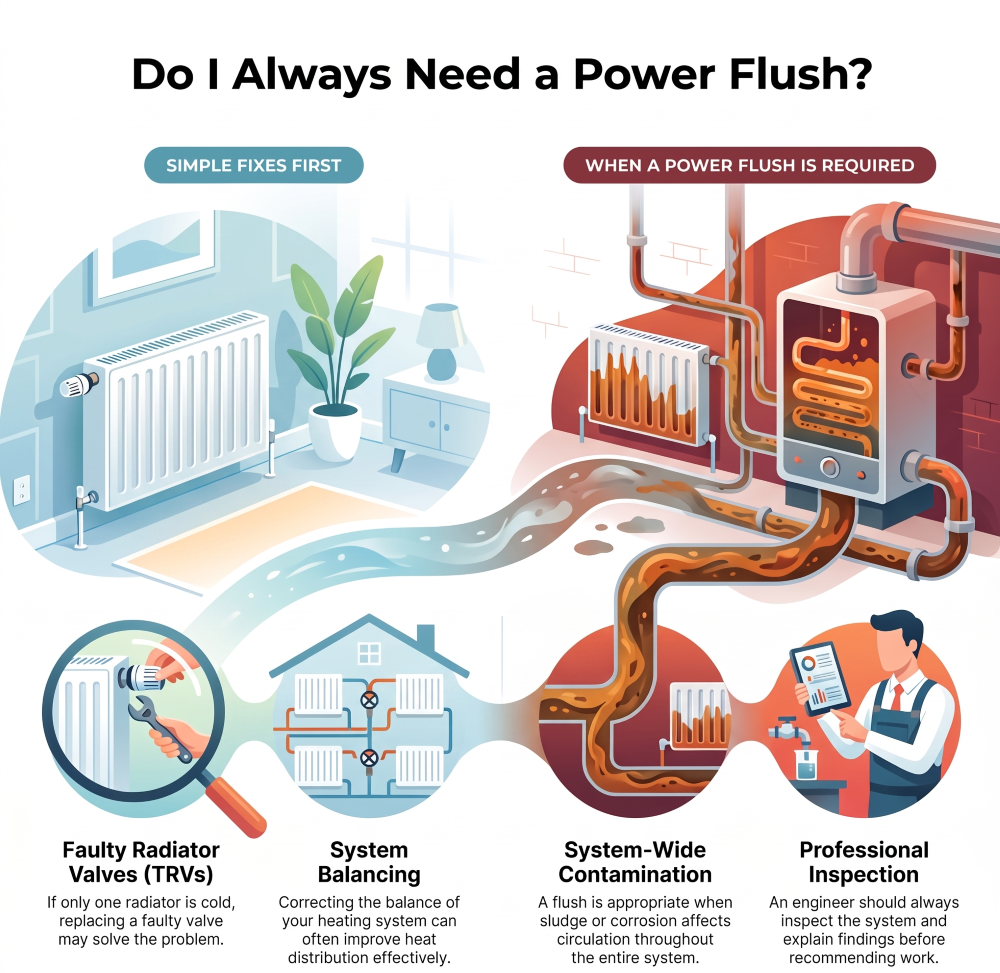
No.
This is important because a power flush isn’t the right solution for every heating problem.
For example, if only one radiator is cold because its TRV is faulty, replacing or repairing the valve may solve the problem.
Likewise, if your radiators aren’t balanced correctly, balancing the heating system could improve the heat distribution without the need for a power flush.
A power flush is generally more appropriate when sludge, corrosion or other contamination is affecting circulation throughout the heating system.
A good heating engineer should check the system first and explain what they’ve found before recommending the work.
What Happens During a Power Flush?
A professional power flush uses specialist equipment to clean sludge, corrosion products and other debris from your radiators and central heating pipework. If you want to understand how the process works step by step, see our guide on how to power flush a central heating system.
Here’s what you can generally expect.
The Heating System Is Checked
The engineer first looks at the condition of the system and checks for signs of sludge, poor circulation and other possible faults.
This gives the engineer a better idea of whether a power flush is actually needed.
Flushing Equipment Is Connected
Specialist power flushing equipment is connected to the heating circuit.
Cleaning chemicals are then used to help loosen deposits inside the radiators and pipework.
The System Is Flushed
Water and cleaning chemicals are circulated through the heating system at high flow rates.
Individual radiators can also be worked on to help remove stubborn deposits.
At Croston Plumbing & Heating, power flushing is carried out using a Norstrom Proflush machine with Adey and Fernox chemicals.
Dirty Water and Debris Are Removed
The contaminated water containing loosened sludge and debris is discharged from the system.
The system is then flushed with clean water until the water is sufficiently clear.
The System Is Refilled
Once the cleaning process is complete, the system is refilled.
Depending on the system and package selected, inhibitors and filtration can also be used to provide additional protection against future contamination.
What Are the Benefits of Power Flushing?
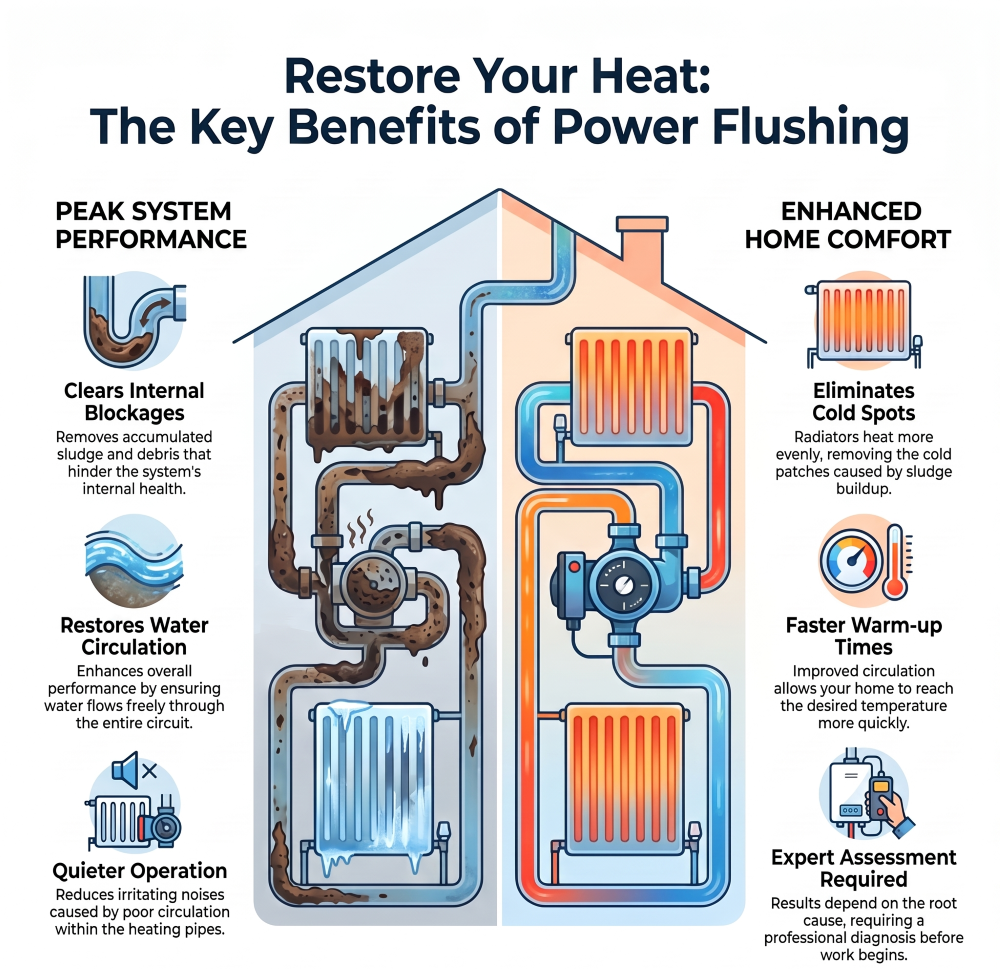
If sludge is genuinely affecting your heating system, a power flush can help:
- Improve heat distribution across radiators
- Reduce cold spots
- Improve water circulation
- Help radiators heat more evenly
- Reduce some noises caused by poor circulation
- Improve overall central heating performance
- Remove accumulated sludge and debris
You may also notice that your home heats more quickly once circulation has improved.
However, the results depend on what’s actually causing the problem. That’s why proper assessment matters before carrying out the work.
How Much Does a Power Flush Cost in Preston in 2026?
If you’re searching for power flush cost in Preston, the price depends on factors such as the number of radiators, the condition of the heating system and the level of aftercare required.
Croston Plumbing & Heating currently lists these packages:
- Up to 8 radiators: £521 + VAT, including a full power flush and 2-year warranty.
- Up to 12 radiators: £591 + VAT, including a full power flush and 2-year warranty.
- Standard + Aftercare: £725 + VAT, including a full power flush, filters, inhibitors and a 5-year warranty.
These are the prices currently published by Croston Plumbing & Heating and may change, so it’s best to confirm the current price when requesting a quotation.
The number of radiators isn’t the only consideration. The condition of your heating system and the amount of sludge or contamination can also affect the work required.
For more information, visit the Power Flushing Preston service page.
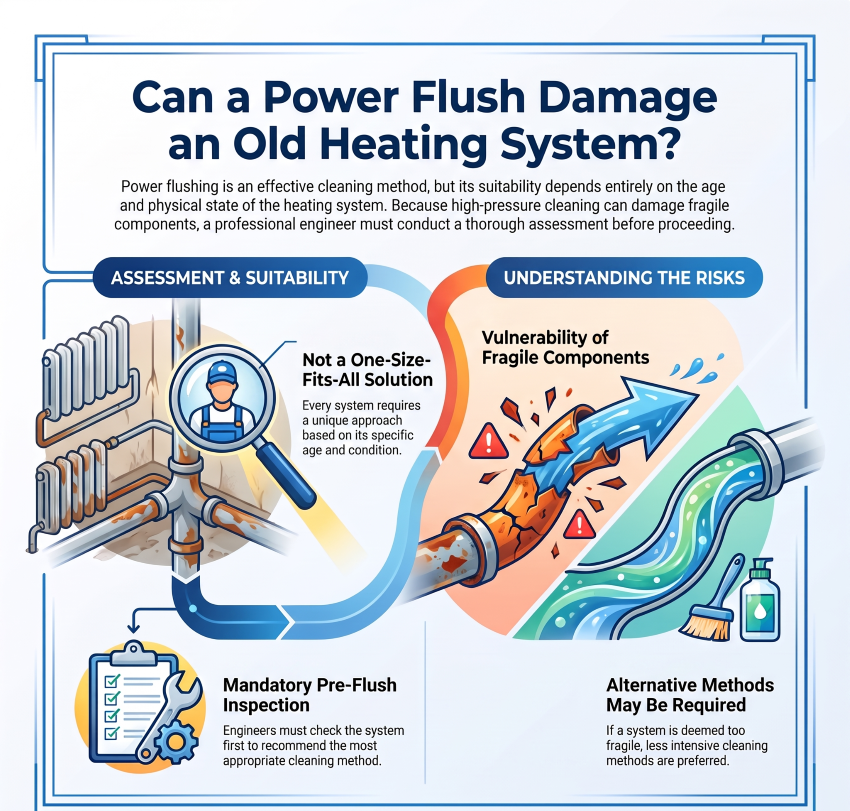
Can a Power Flush Damage an Old Heating System?
This is a common concern for homeowners with older radiators and pipework.
Before carrying out a power flush, the engineer should consider the age and condition of the system. If components are already badly corroded or fragile, another cleaning method may be more appropriate.
In other words, power flushing shouldn’t be treated as a one-size-fits-all solution.
The condition of the system should be checked first so the appropriate approach can be recommended.
How Long Does a Power Flush Take?
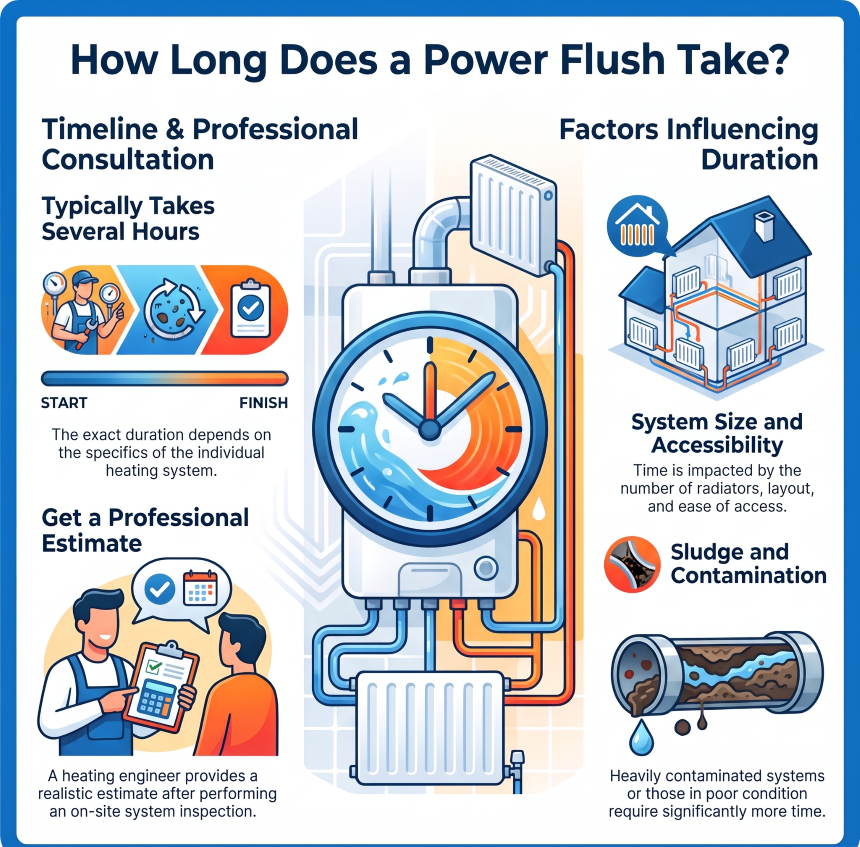
A typical domestic power flush can take several hours, although the exact time depends on the individual heating system.
Things that can affect the duration include:
- Number of radiators
- Size and layout of the system
- Accessibility
- Amount of sludge and contamination
- Overall condition of the heating system
Larger or heavily contaminated systems may take longer.
Your heating engineer should be able to give you a more realistic estimate after seeing the system.
Is a Power Flush Worth It?
If sludge is causing poor circulation, cold radiator spots and uneven heating, a power flush can be worthwhile.
But if your problem is actually a faulty valve, poor balancing or another component, spending money on a full power flush may not solve it.
Before agreeing to the work, ask your heating engineer:
“What have you found that makes you think my system needs a power flush?”
They should be able to explain the problem clearly and tell you why they believe a power flush is appropriate.
Power Flushing in Preston
If you’re looking for power flushing in Preston, cold radiator spots, slow heating and unusual heating noises are all good reasons to have your central heating system checked.
Croston Plumbing & Heating provides power flushing and central heating services across Preston. Their Power Flushing Preston service can help identify whether sludge or poor circulation is affecting your heating system.
Power Flushing in Leyland
If you’re experiencing cold radiators, slow heating or uneven temperatures in Leyland, your central heating system may need checking for sludge, circulation problems or other faults.
Croston Plumbing & Heating provides power flushing in Leyland, with professional system cleaning and assessment available for local homeowners.
Power Flushing in Chorley
For homeowners in Chorley, several radiators staying cold at the bottom can be a sign that sludge or restricted circulation is affecting the heating system.
Croston Plumbing & Heating provides power flushing in Chorley and can assess the system to determine whether a power flush is the appropriate solution.
Power Flushing FAQs
Why is my radiator cold at the bottom but hot at the top?
Sludge or restricted circulation is a common reason. If several radiators have the same problem, the wider heating system should be checked.
Why is my radiator still cold at the bottom after bleeding?
Bleeding removes trapped air but doesn’t remove sludge that has settled inside the radiator. If the radiator remains cold at the bottom, another issue may need investigating.
Do I need a power flush if only one radiator is cold?
Not necessarily. A faulty TRV, balancing issue or blockage affecting that radiator could be responsible. A full power flush is more relevant when problems are affecting several radiators or the wider system.
How do I know if my heating system has sludge?
Common signs include cold spots at the bottom of radiators, slow heating, uneven room temperatures, unusual heating noises and very dark water when bleeding a radiator.
How much does a power flush cost in Preston?
Croston Plumbing & Heating currently lists power flushing packages from £521 + VAT, with larger and aftercare packages available. The final cost depends on the package and heating system.
Do I need a power flush before a new boiler?
Not automatically. The existing heating system should be assessed first. If significant sludge or contamination is found, a power flush or another suitable cleaning method may be recommended.
How long does power flushing take?
Most domestic power flushes take several hours. Larger systems or systems with heavy contamination may take longer.
Can a power flush damage an old heating system?
Older radiators and pipework should be assessed before flushing. Their condition will help determine whether a power flush is suitable and which cleaning method should be used.
Is a chemical flush the same as a power flush?
No. A chemical clean uses cleaning chemicals to loosen deposits, while a power flush uses specialist equipment to circulate water and cleaning chemicals through the heating system at high flow rates. The appropriate method depends on the condition of the system.
Need Power Flushing in Preston?
If your radiators are cold at the bottom, slow to heat or your central heating has become noisy, don’t immediately assume you need new radiators or a new boiler.
Getting the system checked first can help identify what’s actually causing the problem and whether a power flush is the right solution.
Croston Plumbing & Heating provides power flushing in Preston, as well as services across Leyland, Chorley and Wigan.
Call 01257 452 879 for a free quotation or visit the Power Flushing Preston service page to find out more.