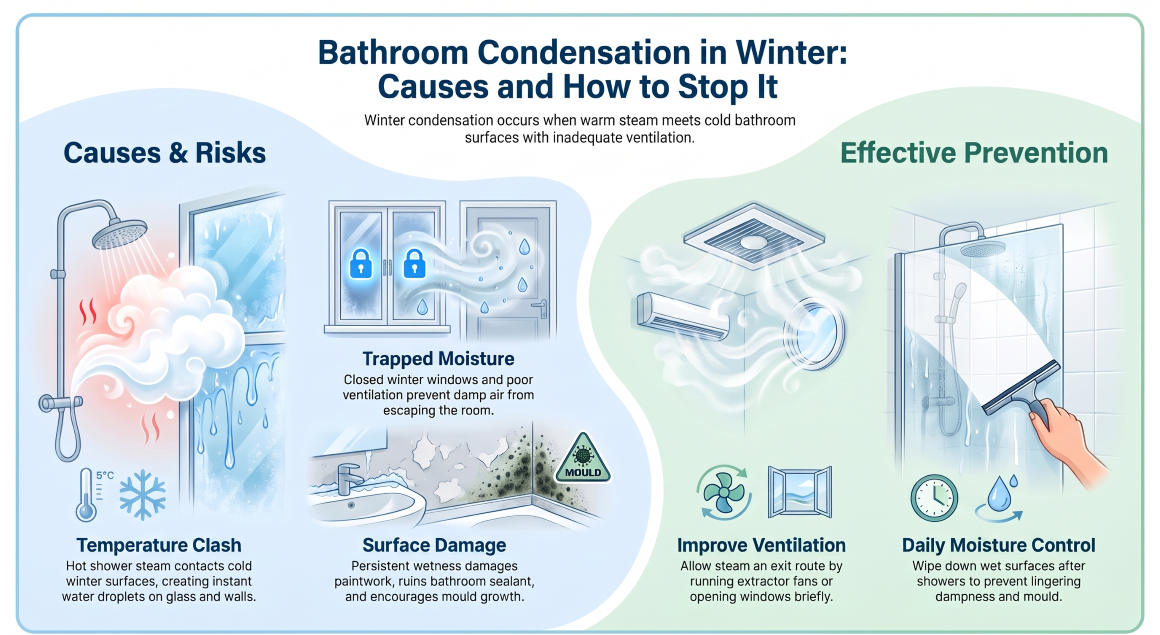
Bathroom condensation in winter is a common problem for UK homeowners. Warm, moisture-filled air from showers and baths comes into contact with colder surfaces, such as windows, mirrors, walls and ceilings, creating water droplets. When windows stay closed and ventilation is limited, that moisture has fewer ways to escape.
If your bathroom mirror is covered in steam after every shower, the windows are dripping with water or the ceiling stays damp for hours, you’re certainly not alone.
It’s a problem many homeowners notice when the colder weather arrives. You might wipe everything down in the morning, only to find the same condensation returning after the next shower.
While a little condensation is normal, persistent moisture can eventually encourage mould growth, damage paintwork and affect bathroom sealant.
The good news is that you don’t necessarily need a new bathroom to tackle the problem. In many cases, improving ventilation and making a few changes to how moisture is managed can make a noticeable difference.
Here’s why bathroom condensation gets worse in winter, what causes it and how to keep your bathroom drier.
Why Is Bathroom Condensation Worse in Winter?
Every shower or hot bath releases moisture into the air. When this warm, humid air comes into contact with a colder surface, it cools and forms tiny water droplets. That’s the condensation you see on your mirror, windows, tiles and ceiling.
During winter, the problem can become more noticeable for three main reasons:
- Colder surfaces: Windows, outside walls and ceilings are often much colder, making it easier for moisture to settle on them.
- Less ventilation: Windows tend to stay closed during colder weather, allowing humid air to build up.
- Cooler bathrooms: If the room isn’t heated regularly, surfaces can remain cold long after you’ve finished showering.
When these factors combine, even a relatively short shower can leave the bathroom feeling damp.
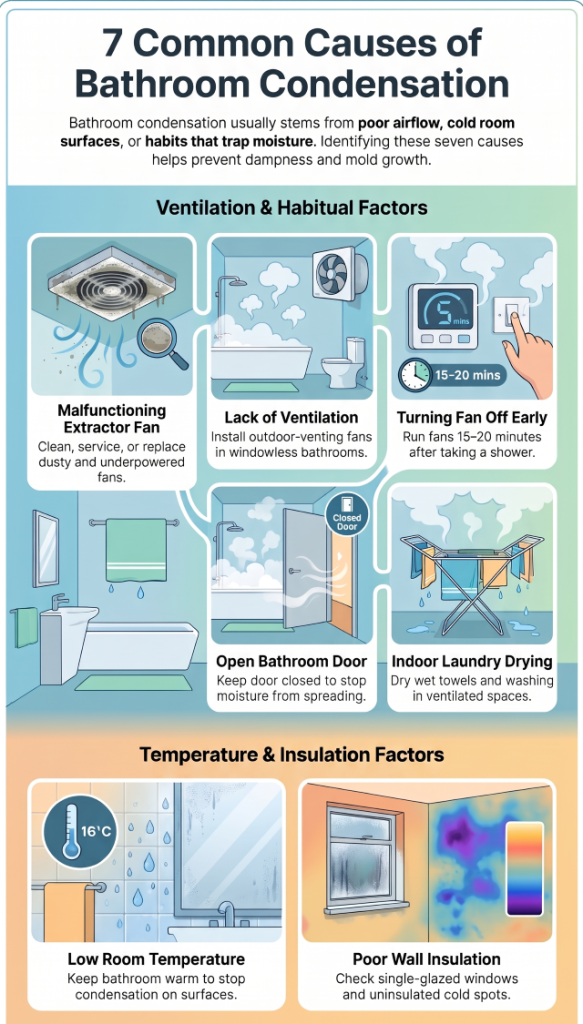
7 Common Causes of Bathroom Condensation
If you’re wondering why your bathroom gets so much condensation, it’s worth looking at how the room is ventilated, heated and used.
These are seven common reasons.
1. Your Bathroom Extractor Fan Isn’t Working Properly
A faulty, dusty or underpowered extractor fan may struggle to remove steam from showers and baths. If mirrors and ceilings stay damp, the fan may need cleaning or replacing.
2. There Is No Extractor Fan or Bathroom Window
Bathrooms without windows rely on extractor fans to remove moisture. Without suitable ventilation, steam can quickly build up, especially in small bathrooms and en-suites.
3. You Switch the Extractor Fan Off Too Soon
Switching the fan off straight after showering can leave moisture in the air. Let it run for around 15-20 minutes afterwards to help clear the remaining steam.
4. Your Bathroom Is Too Cold
Cold walls, ceilings and windows encourage condensation. Keeping the bathroom reasonably warm, alongside good ventilation, can help reduce moisture build-up.
5. Cold Walls, Windows and Poor Insulation
Single-glazed windows and poorly insulated walls create cold surfaces where condensation can collect. Repeated damp patches may indicate a need for insulation or glazing improvements.
6. Moisture Is Spreading Outside the Bathroom
Leaving the bathroom door open while showering allows steam to spread into colder rooms. Keep the door closed and use suitable ventilation to remove moisture.
7. Drying Towels and Washing in the Bathroom
Wet towels and laundry add moisture to the air. Dry them in a well-ventilated area and hang towels fully open to help them dry quicker.
How to Stop Condensation in Your Bathroom
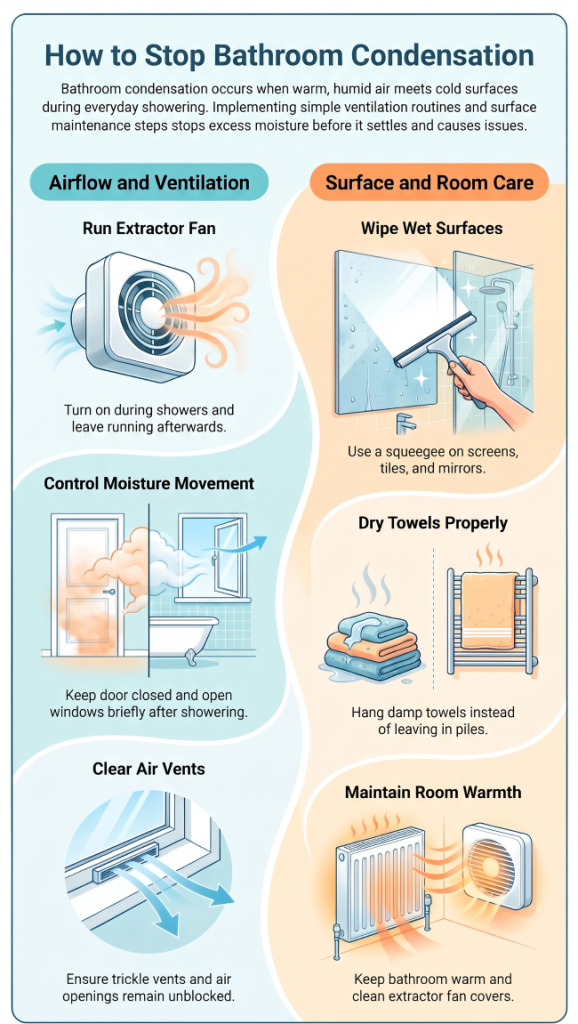
The best way to reduce bathroom condensation is to deal with excess moisture before it has a chance to settle on cold surfaces.
Here are some practical steps you can try:
- Use the extractor fan: Switch it on during showers and leave it running afterwards.
- Keep the bathroom door closed: This helps prevent moisture travelling into other rooms.
- Open a window briefly: If your bathroom has a window, a short period of ventilation after showering can help remove humid air.
- Wipe down wet surfaces: Use a squeegee or cloth on shower screens, tiles, mirrors and windows.
- Keep the room reasonably warm: Avoid allowing the bathroom to become very cold between uses.
- Clean the extractor fan cover: Remove surface dust according to the manufacturer’s instructions, taking appropriate electrical safety precautions.
- Dry towels properly: Avoid leaving damp towels in a pile or on the floor.
- Keep ventilation openings clear: Make sure trickle vents and other intended air openings aren’t blocked.
These changes are often enough to make a noticeable difference, particularly when condensation is caused by everyday showering and inadequate ventilation.
Can a Heated Towel Rail Help Reduce Bathroom Condensation?
A heated towel rail can make your bathroom more comfortable, particularly during colder months.
It provides warmth and helps towels dry more quickly, reducing the amount of time they remain damp.
Keeping the bathroom warmer may also help reduce condensation on colder surfaces.
However, a heated towel rail isn’t a replacement for an extractor fan. If humid air cannot escape, condensation can still develop even when the bathroom is warm.
If you’re considering an upgrade, explore our collection of bathroom radiators and heated towel rails.
Croston Plumbing & Heating can also help with suitable heating installations through its central heating services.
Bathroom Extractor Fans: When Should You Replace Yours?
Sometimes the problem isn’t how you use the extractor fan. It may simply be too old, underpowered or unsuitable for the size of your bathroom.
You might need a replacement if:
- The fan makes unusual noises.
- It doesn’t appear to remove steam effectively.
- Condensation remains for a long time after showering.
- The fan frequently stops working.
- The fan or its ducting is damaged.
- There is no suitable external discharge route.
Modern extractor fans are available with useful features such as humidity sensors, adjustable timers and automatic overrun functions.
A humidity-controlled fan can switch on when moisture levels rise, helping to manage condensation without relying entirely on someone remembering to operate it.
Choosing the correct fan depends on the room, ventilation route and installation requirements. Bathroom electrical installations also need to comply with the relevant safety regulations, so use a suitably qualified installer.
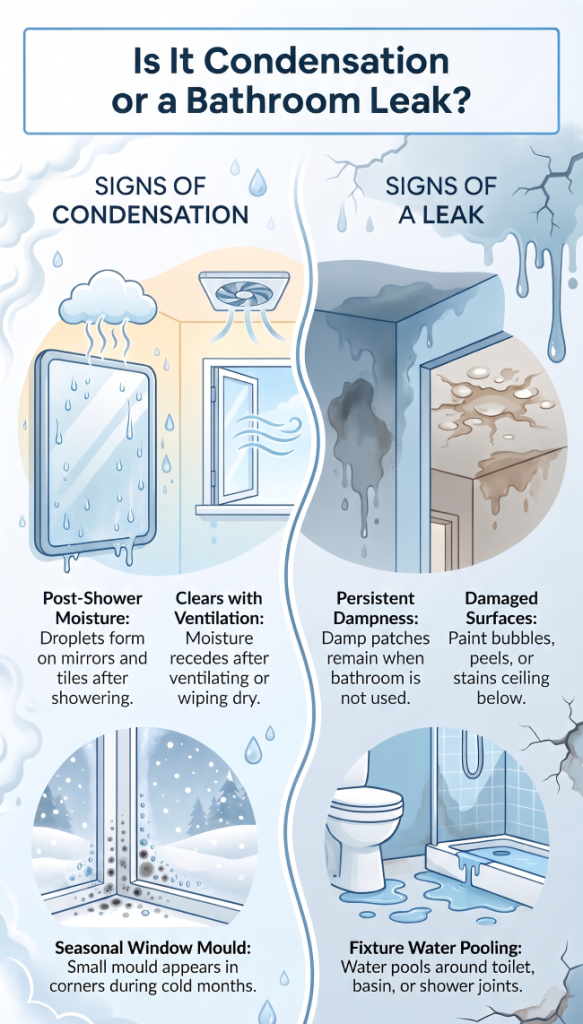
Is It Condensation or a Bathroom Leak?
This is an important distinction because condensation and leaks require different solutions.
Not every damp patch in a bathroom is caused by steam.
Signs that it may be condensation:
- Water droplets appear on mirrors, windows and cold tiles after a shower.
- The bathroom becomes noticeably steamy during use.
- Moisture reduces after ventilation and wiping surfaces dry.
- The problem is worse during colder months.
- Small areas of mould develop around windows or in poorly ventilated corners.
Signs that there may be a leak:
- A damp patch remains even when the bathroom hasn’t been used.
- Water appears around the bath, shower tray, basin or toilet connections.
- Ceiling stains appear below an upstairs bathroom.
- Paint or plaster starts bubbling or peeling.
- Sealant is damaged and water may be getting behind the fittings.
- Damp areas continue to spread despite improved ventilation.
These signs aren’t a definite diagnosis, as condensation can also cause persistent damp and mould. If you suspect a leak, have the area inspected before covering it with fresh sealant or paint.
If you’re planning bathroom improvements, our team can help with bathroom installation and renovation services across Chorley, Preston and Leyland.
How to Deal With Black Mould in the Bathroom
Black spots around shower sealant, window frames and bathroom ceilings can sometimes be a sign of persistent condensation.
Mould develops where moisture remains for long enough, particularly on cold surfaces with limited airflow.
Simply painting over it or replacing the silicone won’t necessarily solve the problem.
To address it properly:
- Identify where the moisture is coming from.
- Improve ventilation and reduce excess humidity.
- Keep affected surfaces as dry as possible.
- Clean small areas of mould using an appropriate mould treatment and follow the product instructions.
- Investigate any persistent damp patches or recurring mould.
Wear suitable protective equipment when cleaning mould, avoid disturbing large affected areas and never mix cleaning products.
If mould continues returning, covers a substantial area or is associated with unexplained damp, seek professional advice. The underlying cause needs to be addressed rather than repeatedly treating the visible marks.
What About Bathrooms Without Windows?
Bathrooms without windows need particular attention because they cannot rely on natural window ventilation.
A properly installed extractor fan is especially important in these rooms.
If you already have one, check that:
- It switches on correctly.
- The grille and accessible cover are clean.
- It continues running for long enough after showering.
- The ductwork is in good condition.
- Extracted air is discharged outside rather than into the loft.
If there is no extractor fan, installing suitable mechanical ventilation may be the most effective long-term improvement.
A humidity-sensing fan can also be useful in an internal bathroom because it responds to moisture levels automatically.
When Should You Get Professional Help?
Occasional condensation after a hot shower is normal. However, if your bathroom stays damp for hours or mould repeatedly returns, it’s worth investigating further.
Consider getting professional help if:
- Your extractor fan isn’t working properly.
- Your bathroom has no effective ventilation.
- Damp patches remain even when the bathroom isn’t being used.
- Water stains are appearing on ceilings or walls.
- Mould keeps returning despite cleaning.
- You suspect a leak around the bath, shower or pipework.
- You’re planning a bathroom renovation and want ventilation and heating considered together.
Addressing the cause early can help prevent further damage to bathroom surfaces and fittings.
Frequently Asked Questions About Bathroom Condensation
Why does my bathroom get so much condensation in winter?
Cold windows, walls and ceilings make it easier for moisture from showers and baths to settle as water droplets. Closed windows, insufficient heating and poor ventilation can make the problem worse.
How do I stop condensation in a bathroom with no window?
A suitable extractor fan is particularly important in a bathroom without a window. Make sure it works properly, vents outdoors and continues running after showering. Keeping the room reasonably warm also helps.
How long should I run my extractor fan after a shower?
Around 15 to 20 minutes is a useful general guide, although the actual time depends on the fan, bathroom size and moisture levels. Leave it running longer if the room is still steamy.
Should I leave my bathroom window open in winter?
You don’t need to leave it open all day. Opening it briefly after a shower can help remove humid air, provided it’s practical and safe. A working extractor fan is particularly useful during colder weather.
Will a heated towel rail stop bathroom condensation?
A heated towel rail can help keep the room warmer and dry towels more quickly, but it won’t remove humid air. It works best alongside effective ventilation.
Why is my bathroom ceiling wet after a shower?
Warm, humid air rises and can settle on a cold ceiling, forming water droplets. If the ceiling remains damp, shows staining or gets wet when the shower hasn’t been used, investigate possible leaks or other damp problems.
Why does black mould keep coming back in my bathroom?
Mould often returns when the conditions that caused it haven’t changed. Poor ventilation, persistent moisture and cold surfaces can all contribute. Cleaning the mould without improving the underlying conditions is unlikely to provide a lasting solution.
Is bathroom condensation the same as damp?
No. Condensation is moisture from the air collecting on cooler surfaces. Damp can also result from plumbing leaks, water penetration or other building defects. The correct cause needs to be identified before choosing a solution.
Bathroom Improvements in Chorley, Preston and Leyland
If your bathroom suffers from persistent condensation, poor ventilation or recurring mould, it may be worth looking beyond the immediate symptoms.
Sometimes a better extractor fan is all that’s needed. In other cases, improving the heating, replacing tired fittings or planning a more complete bathroom renovation may be the better option.
At Croston Plumbing & Heating, we help homeowners across Chorley, Preston, Leyland and surrounding Lancashire areas with bathroom installations, heating improvements and plumbing services.
Whether you’re considering a new bathroom, a heated towel rail or improvements to your existing setup, our team can help you explore suitable options.
Call us on 01257 452 879, contact us through WhatsApp or request a bathroom installation quote.
You can also explore our bathroom inspiration gallery or read our guide to visiting the Croston Plumbing bathroom showroom if you’re considering an update to your home.