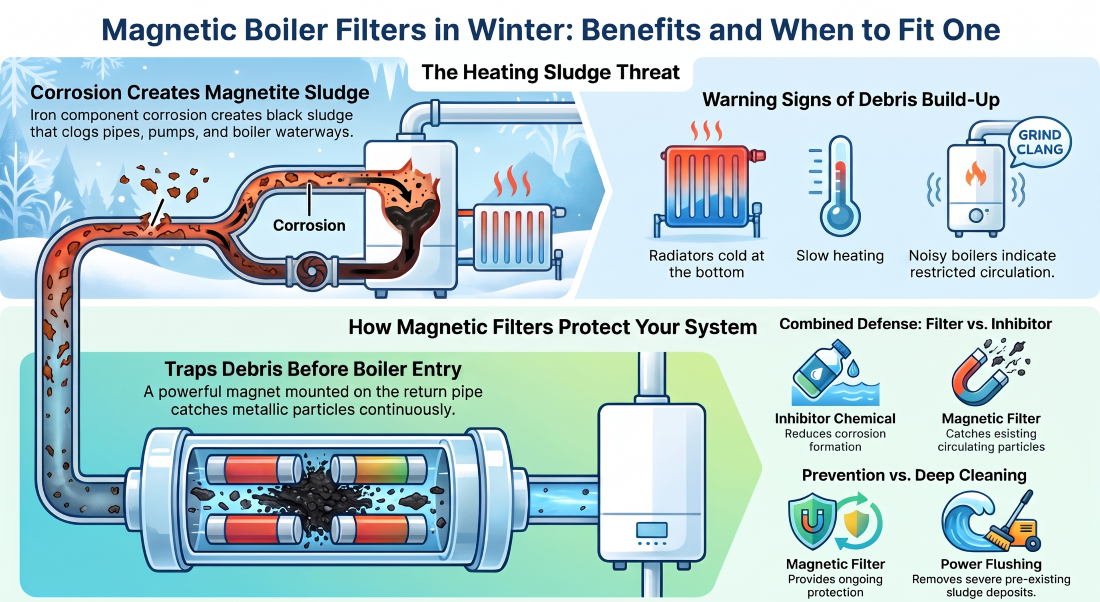
When your heating is running every day during winter, the last thing you want is a boiler breakdown or radiators that struggle to warm your home. But have you ever wondered what happens to the dirt and tiny metal particles circulating around your central heating system?
Over time, this debris can collect inside radiators and pipes, affecting how well your heating works. One way to help protect your system is by fitting a magnetic boiler filter.
It’s a relatively small component, but it plays an important role in collecting metal particles before they can reach sensitive parts of your boiler.
So, what does a magnetic boiler filter actually do, and is it worth having one fitted before winter?
At Croston Plumbing & Heating, we help homeowners across Chorley, Preston, Leyland, Wigan and surrounding Lancashire areas look after their heating systems. Here’s what you should know before deciding whether your home needs one.
What Is a Magnetic Boiler Filter?
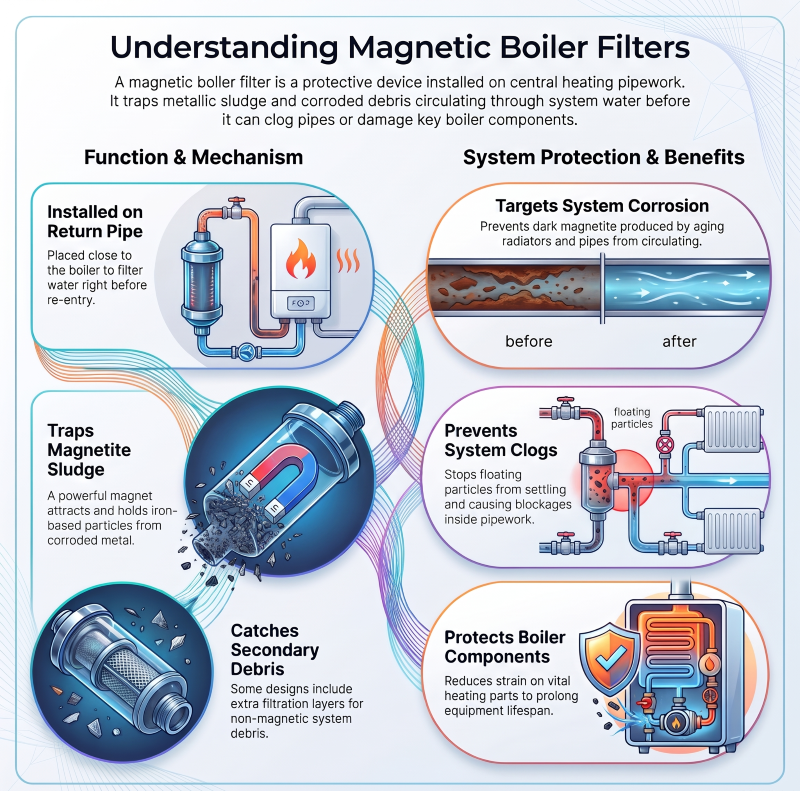
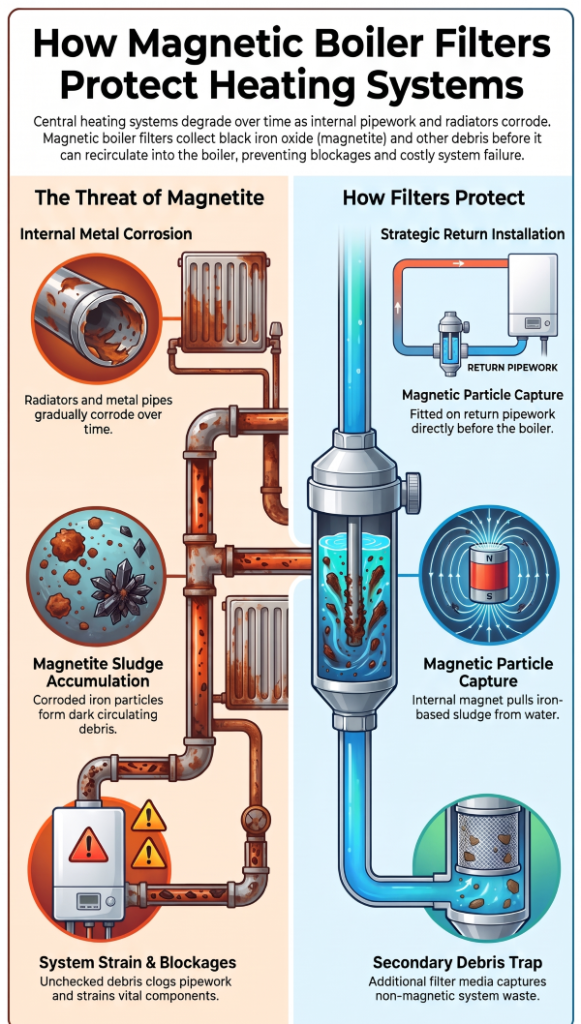
A magnetic boiler filter is a device fitted to your central heating pipework, usually on the return pipe close to the boiler.
Its main job is to collect metal particles and debris from the water circulating around your heating system. A powerful magnet inside the filter attracts iron-based particles, while some designs also include additional filtration components to catch other types of debris.
Over time, radiators, pipes and other metal components can develop small amounts of corrosion. This creates a dark substance known as magnetite, which can circulate through the system and settle in different areas.
If left unchecked, this debris can contribute to blockages and put extra strain on important heating components.
A magnetic boiler filter catches much of this material before it makes its way back into the boiler.
Regular maintenance of your central heating system can help keep your heating working reliably throughout the year.
What Is the Black Sludge Inside Radiators?
If you’ve ever bled a radiator and noticed dark, dirty water coming out, you may have encountered central heating sludge.
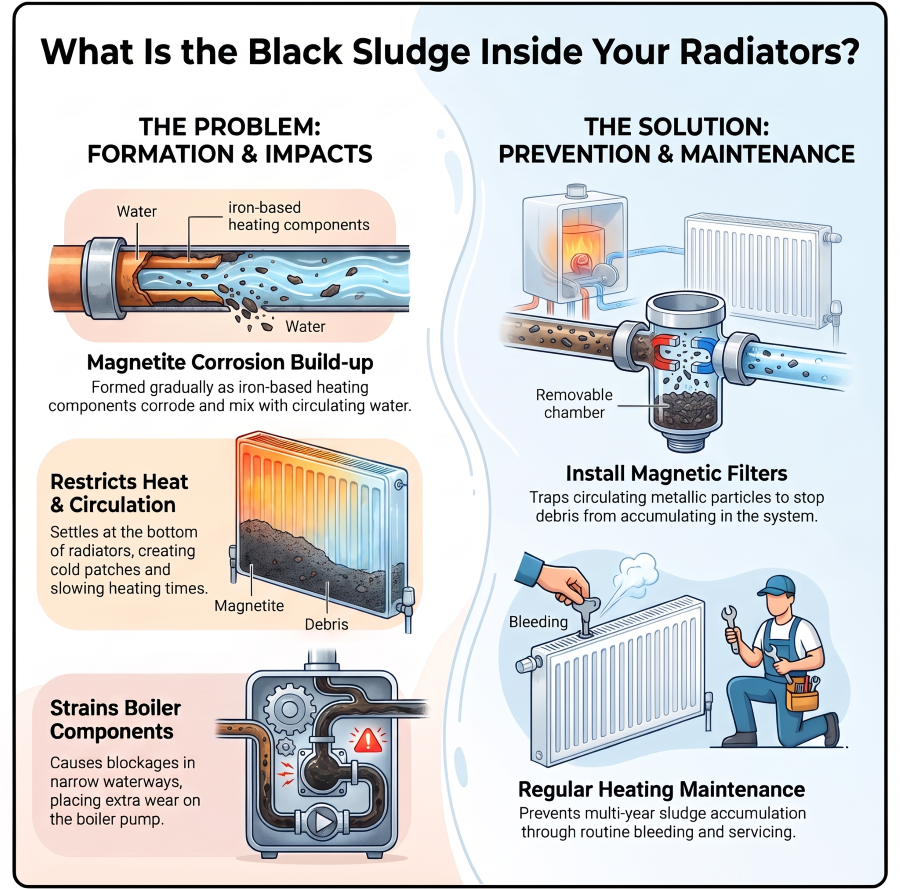
This black substance is commonly made up of magnetite, which forms when iron-based components inside a heating system corrode.
As water moves around the system, these particles can collect in radiators, pipes, pumps and other components.
A build-up of sludge can lead to several problems, including:
- Cold patches at the bottom of radiators.
- Radiators taking longer to heat up.
- Reduced water circulation around the heating system.
- Extra strain on the boiler pump.
- Blockages in narrow waterways and components.
- Reduced heating performance.
Sludge doesn’t develop overnight. It can gradually accumulate over several years, particularly in older heating systems that haven’t been properly maintained.
A magnetic filter helps collect circulating debris, reducing the amount that continues moving around the system.
If your radiators have cold patches at the bottom, read our guide on why radiators are cold at the bottom to understand the possible causes and solutions.
Why Is a Magnetic Boiler Filter Worth Considering Before Winter?
During winter, most households rely on their central heating much more frequently. The boiler and radiators work harder to keep rooms comfortable, which can make existing heating problems more noticeable.
If your system already contains a build-up of sludge, increased use may highlight problems with water circulation and heating performance.
Here are some signs that your heating system may need attention.
1. Radiators are cold at the bottom
If the top of a radiator gets warm but the bottom stays cold, sludge could be restricting water circulation. However, trapped air and other circulation problems can also cause uneven heating.
2. Your boiler makes unusual noises
Banging, kettling or rumbling sounds can sometimes indicate restricted water flow or deposits inside the heating system. These noises can have other causes too, so an engineer should investigate them.
3. Some rooms take longer to warm up
If certain radiators heat up much more slowly than others, there could be a circulation problem within the system.
4. Your heating system needs frequent attention
Repeated problems with pumps, valves or circulation may indicate that debris is affecting the system.
5. Your boiler is getting older
Older heating systems have often had more time to accumulate corrosion debris, particularly if they haven’t received regular cleaning and maintenance.
These symptoms don’t automatically mean you need a magnetic filter, but they’re worth discussing with a qualified heating engineer.
For more ways to keep your heating working effectively, read our guide on improving radiator efficiency and lowering heating bills.
Do You Need a Magnetic Filter If You Have a New Boiler?
If you’re having a new boiler installed, it’s worth discussing a magnetic filter with your installer.
Even when the boiler itself is brand new, the existing radiators and pipework may contain dirt and corrosion debris from years of use.
Without suitable system cleaning and protection, some of this material could circulate into the new boiler.
A system filter collects debris from the heating water, helping protect the boiler and its internal components. An in-line filter is commonly included as part of the system preparation for a new boiler installation. The exact filter requirements depend on the boiler manufacturer and installation instructions.
Some manufacturers also specify particular filter and water-treatment requirements as part of their warranty conditions, so always check the terms for your particular boiler.
If you’re planning a replacement, take a look at our new boiler installation services to find out how we can help.

Magnetic Boiler Filter vs Power Flushing: What’s the Difference?
This is a common question from homeowners. Although both help maintain a central heating system, they do very different jobs.
Magnetic boiler filter
A magnetic filter provides ongoing protection. It collects iron-based particles and, depending on its design, other debris as water circulates through the system.
Power flushing
Power flushing is a cleaning process used to remove accumulated sludge and debris from radiators, pipes and other parts of the heating system.
If your radiators are already struggling because of a significant sludge build-up, simply fitting a magnetic filter won’t remove the existing deposits.
An engineer may recommend cleaning the system first and then fitting a filter to help reduce future debris build-up.
However, not every heating system needs a power flush. The right approach depends on its condition and the problems you’re experiencing.
You can find out more about our power flushing service if you think your central heating system needs a deeper clean.
Want to understand how the cleaning process works? Read our guide to power flushing a central heating system for more details.
Why Is Central Heating Inhibitor Important Alongside a Magnetic Filter?
A magnetic boiler filter and central heating inhibitor help protect your heating system, but they work in different ways.
Central heating inhibitor is a chemical treatment added to the system water. Its purpose is to help reduce internal corrosion and the formation of sludge.
A magnetic filter, on the other hand, physically collects magnetic particles as water circulates through the pipework.
In simple terms:
- Inhibitor helps reduce corrosion: It protects internal metal components and reduces the conditions that lead to sludge formation.
- A magnetic filter collects debris: It catches magnetic particles that are already circulating around the system.
Using suitable corrosion protection alongside a magnetic filter can help maintain a cleaner heating system over time.
If your system has been drained, flushed or altered, it’s important to make sure the inhibitor concentration is checked and topped up where necessary. Your heating engineer can advise on the correct product and amount for your system.
How Often Should a Magnetic Boiler Filter Be Cleaned?
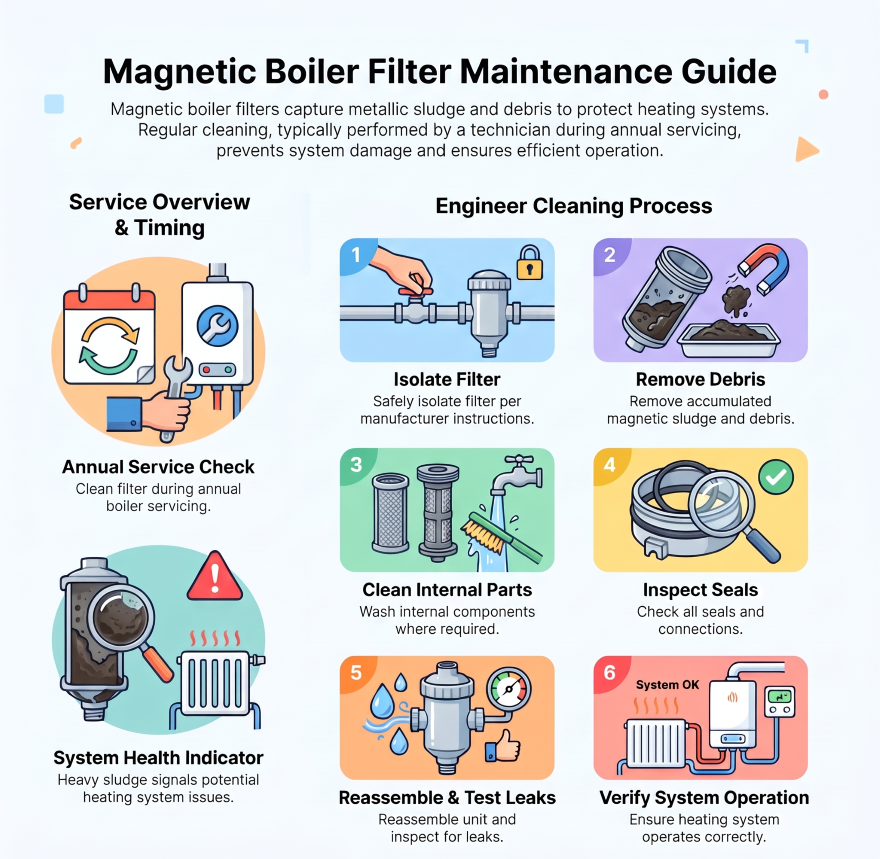
A magnetic boiler filter needs occasional cleaning to remove the debris it collects.
For many households, checking and cleaning the filter during the annual boiler service is a sensible approach. However, the recommended maintenance interval can vary depending on the filter model and the condition of your heating system.
During cleaning, an engineer will usually:
- Isolate the filter according to the manufacturer’s instructions.
- Remove the accumulated magnetic debris.
- Clean the internal components where required.
- Check the seals and connections.
- Reassemble the filter and check for leaks.
- Make sure the heating system is operating correctly.
If a filter collects a large amount of sludge during repeated services, it may indicate that the heating system needs further investigation.
It’s worth asking your engineer whether magnetic filter cleaning is included in your annual boiler service.
You can also explore our boiler servicing and repairs to find out more about looking after your heating system.
Can You Fit a Magnetic Boiler Filter to an Existing Heating System?
Yes. In most cases, a magnetic filter can be added to an existing central heating system, provided there’s a suitable location and enough space on the pipework.
This can be particularly useful for older systems that were installed without one.
However, fitting a filter isn’t simply a case of attaching a component to a pipe. The heating system may need to be partially drained, and the pipework must be altered correctly before the system is refilled and checked.
A suitable heating engineer can assess your installation and recommend the right filter.
It’s also important to make sure the system has the correct level of corrosion protection, usually through a suitable central heating inhibitor.
We wouldn’t recommend attempting the installation yourself unless you have the necessary plumbing and heating experience.
Is a Magnetic Boiler Filter Worth the Money?
For many homeowners, a magnetic boiler filter is a worthwhile addition to a central heating system.
It helps reduce the amount of corrosion debris circulating through the boiler and provides an extra layer of protection for important heating components.
The main benefits include:
- Helping protect the boiler from circulating debris.
- Reducing the build-up of magnetic sludge.
- Supporting good water circulation.
- Helping protect pumps and other heating components.
- Making routine heating system maintenance easier.
It’s important to remember that a magnetic filter isn’t a guarantee against boiler breakdowns. It won’t fix every heating problem or remove existing sludge throughout the system.
However, when correctly fitted and maintained, it can form an important part of looking after your central heating.
Frequently Asked Questions
Do I need a magnetic filter for my boiler?
A magnetic filter is recommended for many wet central heating systems because it helps collect metal particles and debris before they reach the boiler. However, the right arrangement depends on your boiler, pipework and the manufacturer’s installation requirements.
Can a magnetic boiler filter improve heating efficiency?
It can help maintain good water circulation by collecting debris that might otherwise contribute to blockages. However, it won’t automatically reduce energy bills or improve an already clean and well-maintained system.
Will a magnetic filter stop my radiators getting cold at the bottom?
It can help prevent further magnetic sludge from circulating, but it won’t remove sludge that has already settled inside radiators. Existing problems may require cleaning or further investigation.
Can I have a magnetic filter fitted without replacing my boiler?
Yes. Many existing central heating systems can have a magnetic filter installed without replacing the boiler. An engineer will need to check the pipework and available space first.
How often should a magnetic boiler filter be cleaned?
For many homes, checking and cleaning the filter during the annual boiler service is a sensible approach. Always follow the filter manufacturer’s maintenance instructions, as some systems may need more frequent attention.
Does a magnetic filter need replacing?
Not necessarily. Many filters are designed to be cleaned and reused. However, damaged seals, worn components or other faults may mean that parts need replacing.
Is a magnetic filter the same as a central heating filter?
A magnetic boiler filter is a type of central heating filter. Some models combine magnetic collection with additional filtration to catch different types of debris.
Should I fit a magnetic filter before winter?
If your system doesn’t already have one, having it assessed before winter is a sensible idea. An engineer can check the condition of your heating system and recommend suitable protection before you rely on it more heavily.
Protect Your Central Heating System Before Winter
A magnetic boiler filter might not be the first thing you think about when preparing your home for winter, but it can make a useful difference to the long-term protection of your heating system.
Whether you’re installing a new boiler, looking after an older heating system or experiencing problems with radiator circulation, it’s worth checking whether your system has suitable filtration and corrosion protection.
At Croston Plumbing & Heating, our Gas Safe registered engineers work with homeowners across Chorley, Preston, Leyland, Wigan and surrounding Lancashire areas.
If you’re unsure whether your boiler needs a magnetic filter, we can assess your heating system and explain the options available.
Call us on 01257 452 879, WhatsApp us on 07498 318394 or contact Croston Plumbing to arrange a visit.
Croston Plumbing & Heating
Unit G, Grove Mill, Grove Park Industrial Estate, Eccleston, Chorley PR7 5TZ.