Have you noticed your electricity bills creeping up as the weather gets colder? If you have an air source heat pump, you might be wondering whether it’s working as it should or simply using more energy to keep your home warm.
Some increase in winter electricity consumption is perfectly normal. Your heat pump has to work harder in colder weather, and your home needs more heat to stay comfortable. However, if your bills have risen more than expected, it’s worth looking at how the system is running.
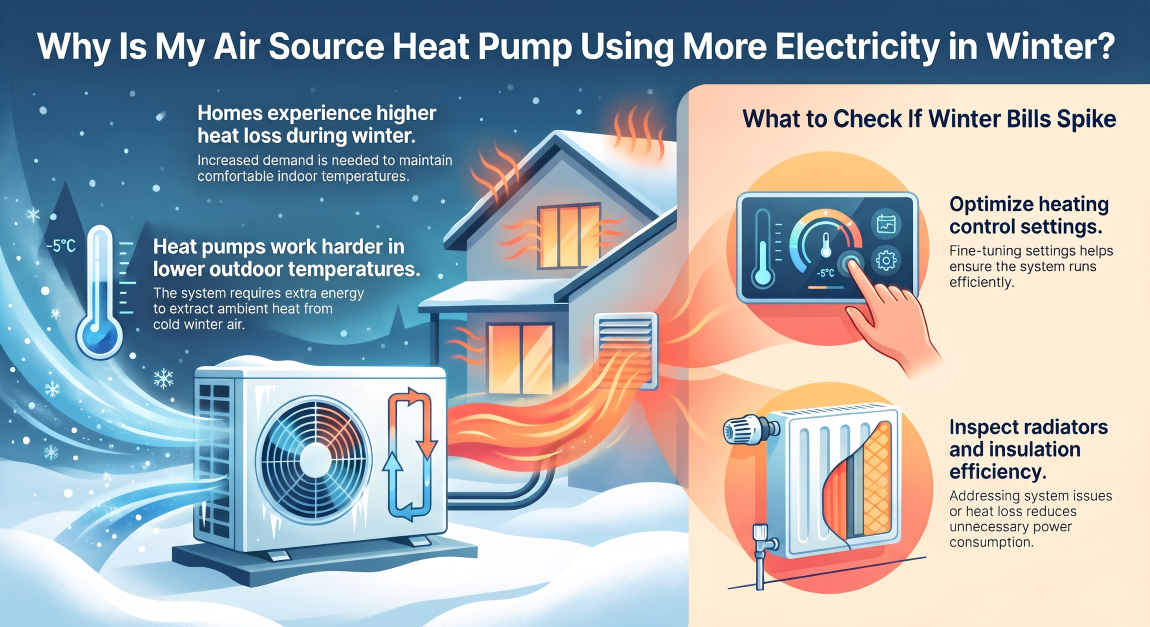
Sometimes, a few adjustments to the heating controls can help. In other cases, your radiators, insulation, or heating system may need attention.
Here’s what to look out for and how to get the best from your air source heat pump during the colder months.
Is It Normal for an Air Source Heat Pump to Use More Electricity in Winter?
Yes. An air source heat pump takes heat from the outside air and transfers it into your home. When outdoor temperatures fall, extracting heat becomes more challenging, and the system generally needs more electricity to deliver the same amount of warmth.
Your home also loses heat more quickly in cold weather, so the heating may need to run for longer to maintain a comfortable temperature.
This means higher winter electricity bills don’t automatically indicate a problem. The important thing is to understand whether the increase is reasonable for your property and how your system is operating.
If your electricity use has risen sharply without an obvious explanation, the following factors are worth checking.
Your Heat Pump’s Flow Temperature Is Too High
Flow temperature is the temperature of the water your heat pump sends around your radiators or underfloor heating.
Heat pumps generally work more efficiently when they can heat water to a lower temperature. If the flow temperature is set higher than your home needs, the system may use more electricity than necessary.
This can happen when settings are adjusted to warm a house quickly or when the heating system hasn’t been properly optimised.
What can you do?
Ask your installer or heating engineer to check whether the flow temperature is suitable for your property. The aim is to keep your rooms comfortable while allowing the heat pump to operate as efficiently as possible.
Avoid turning the temperature down sharply if your home is already struggling to stay warm. The right setting depends on your radiators, insulation and heating system design.


Your Heating Curve Needs Adjusting
Many air source heat pumps use weather compensation, sometimes called a heating curve. This allows the system to adjust its water temperature in response to changes in the outdoor temperature.
When configured correctly, it can help the heat pump deliver the heat your home needs without running the water temperature unnecessarily high.
If the curve isn’t set up properly, the system might send water around the radiators that’s hotter than necessary. Alternatively, it may struggle to maintain a comfortable indoor temperature during colder weather.
If your heat pump seems to run constantly but your rooms still feel chilly, it’s worth asking an engineer to review the controls.
Your Existing Radiators May Not Be Suitable
One common concern among heat pump owners is whether their existing radiators are large enough.
Heat pumps usually operate with lower water temperatures than traditional gas boilers. To heat a room effectively at those temperatures, the radiators must be able to deliver enough heat.
If your radiators are too small for the room, your heat pump may need a higher flow temperature to maintain comfort. This can reduce its efficiency.
You don’t necessarily need to replace every radiator. Some may already be suitable, while others could benefit from an upgrade.
If certain rooms never seem to get warm enough, a room-by-room heat-loss assessment can help identify whether radiator size is contributing to the problem.
For older properties, our guide to the best heating solutions for older homes in Lancashire explains how radiator upgrades, insulation and other heating improvements can help improve comfort.


You’re Making Large Changes to the Heating Schedule
It can be tempting to switch the heating right down overnight or turn it off whenever you leave the house to save electricity.
However, heat pumps often work well with steady heating and smaller temperature adjustments. If your home cools down significantly, the system has to replace that lost heat when you turn it back up.
That doesn’t mean every heat pump should run at the same temperature around the clock. The best approach depends on your property’s insulation, the system’s controls and your household routine.
A practical tip: Try to avoid making frequent, large changes to your thermostat. Ask your installer about suitable setback temperatures and heating schedules for your particular system.
If you’re looking at ways to heat your home more efficiently, our complete underfloor heating guide explains how different heating systems work and why water-based underfloor heating can work well with heat pumps.
Cold Weather Is Causing More Defrost Cycles
If you’ve noticed steam rising from your outdoor heat pump unit on a cold morning, there’s usually no need to worry.
In cold, damp weather, frost can form on the outdoor coil. Your heat pump periodically runs a defrost cycle to clear this frost and keep operating properly.
During defrosting, the system uses energy and temporarily changes how it operates. More frequent defrost cycles can contribute to increased electricity consumption in certain weather conditions.
A little frost between cycles and occasional clouds of steam can be normal. However, if the unit remains heavily iced over, defrosting doesn’t seem to clear the ice, or heating performance drops noticeably, contact a qualified heat pump engineer.
Never chip ice away from the unit or interfere with its fan.


Your Immersion Heater or Backup Heater Is Running More Often
This is worth checking if your air source heat pump electricity consumption seems unusually high.
Some systems have an electric backup heater or an immersion heater for the hot water cylinder. These can be useful in certain circumstances, but direct electric heating generally uses more electricity to deliver a given amount of heat than a well-operating heat pump.
If the backup heater runs more often than expected, your bills may rise noticeably. Possible reasons include control settings, high hot water demand, very cold conditions or a system issue.
Hot water settings can also affect running costs. Heating stored water to a higher temperature than necessary, or using an immersion heater more often than intended, can increase consumption.
Don’t disable backup heating or change safety-related hot water settings without checking the manufacturer’s instructions. Ask an engineer to investigate if you suspect the heater is operating too frequently.
The Outdoor Unit Has Restricted Airflow
Your heat pump needs a good supply of outdoor air to extract heat. Leaves, garden debris, or other obstructions around the unit can interfere with airflow.
During winter, check that the area around the unit is clear and that snow or debris isn’t blocking the air intake or outlet. Follow the manufacturer’s guidance on the required clearances.
Avoid covering the unit to protect it from the weather. It is designed to operate outdoors, and covering it can restrict airflow.
If you notice persistent ice build-up or the fan appears to be struggling, leave repairs and internal checks to a qualified engineer.


Your Home Is Losing Too Much Heat
Sometimes the problem isn’t the heat pump at all. It may be the amount of heat escaping from your home.
Poor loft insulation, draughts, uninsulated areas and inefficient windows can all increase heating demand. The colder it gets outside, the more noticeable this can become.
If your home loses heat quickly, the heat pump must work harder or run for longer to maintain the temperature you want.
Improving insulation and reducing draughts where appropriate can help your heating system maintain comfort. It is also worth checking that doors and windows close properly and that your heating controls reflect how you use the house.

Your Heat Pump Needs a Service or System Check
Like any heating system, an air source heat pump benefits from appropriate maintenance.
A service can help identify issues such as restricted airflow, control problems, leaks, or faults that may affect performance. An engineer can also review how the system is operating and whether its settings remain suitable for your home.
If your electricity use has gradually increased over time, or your system no longer heats your rooms as effectively as it used to, a professional check may help establish why.
Follow the manufacturer’s maintenance schedule and warranty requirements rather than assuming every system has identical servicing needs.
If you’re experiencing problems with your heating system, explore our central heating services to learn more about heating maintenance, repairs, and efficiency improvements.
What Can You Check Yourself to Reduce Heat Pump Electricity Use?
Before arranging a visit, you can make a few straightforward checks.
- Check your electricity usage: Compare your actual consumption in kWh with previous periods, taking account of outdoor temperatures and how much heating you’ve used.
- Review your heating schedule: Look for frequent on/off changes or unnecessarily high temperature settings.
- Keep the outdoor unit clear: Remove loose leaves and debris you can safely reach, following the manufacturer’s guidance.
- Review hot water settings: Check that the schedule and temperature follow your installer’s recommendations.
- Look for warning signs: Make a note of error codes, unusual noises, persistent icing, or rooms that won’t warm up.
- Check your insulation: Look for obvious draughts and areas where heat may be escaping.
Avoid making several changes at once, as this can make it difficult to work out what’s helping. If you’re unsure about a setting, ask your installer before changing it.
If you’re considering different ways to distribute heat around your home, our complete underfloor heating guide explains the options and factors to consider. You can also explore our underfloor heating installation services to learn more about the options available. Water-based underfloor heating can work particularly well with an air source heat pump because both systems can operate effectively at lower water temperatures when correctly designed.
When Should You Call a Heat Pump Engineer?
Higher electricity use alone doesn’t necessarily mean your heat pump needs repairing. However, it’s worth arranging a professional assessment if:
- Your electricity consumption has increased substantially without an obvious change in weather or heating use.
- Your home isn’t reaching the temperature you’ve set.
- Your outdoor unit remains heavily iced over or doesn’t appear to defrost properly.
- The system displays error codes or makes unusual noises.
- Your backup or immersion heater appears to be running excessively.
- You notice a decline in heating or hot water performance.
An engineer can review the flow temperature, heating curve, radiator sizing, controls and overall system operation to help identify the cause.
Croston Plumbing & Heating provides air source heat pump installation services in the local area. If you’re considering a new system or need professional advice about your heating requirements, visit our air source heat pump services in Chorley and Preston page to find out more.
Frequently Asked Questions About Heat Pump Electricity Use in Winter
Why is my air source heat pump using so much electricity?
Cold weather, increased heating demand, high flow temperatures, hot water use and backup heating can all increase electricity consumption. If the increase seems unusually large, compare your usage in kWh and arrange a system check if necessary.
Is it normal for heat pump electricity use to double in winter?
It can happen in some circumstances, but there is no single figure that’s normal for every household. Consumption depends on the weather, property size, insulation, heating settings and hot water demand. A large increase is worth investigating if it cannot be explained by these factors.
Should I leave my air source heat pump on all day in winter?
Many heat pumps operate efficiently with steady heating and modest temperature setbacks rather than frequent, large changes. However, the best schedule depends on your property and system. Ask your installer for advice tailored to your home.
What temperature should my heat pump be set to in winter?
There isn’t one ideal setting for every property. Your room thermostat, flow temperature and heating curve serve different purposes and should be configured to suit your heating system. Lower flow temperatures generally improve efficiency when they can still provide enough heat.
Why is my heat pump steaming in cold weather?
It’s often the normal defrost cycle. The heat pump temporarily clears frost from its outdoor coil, and the melting ice can produce visible steam. If the unit stays heavily iced over or its performance deteriorates, arrange a professional check.
Can insulation reduce my air source heat pump running costs?
Yes. Improving insulation and reducing unwanted draughts can reduce heat loss. This means the heat pump may need to supply less heat to maintain a comfortable indoor temperature. The potential benefit depends on the property’s existing condition.
How often should an air source heat pump be serviced?
Follow the manufacturer’s maintenance recommendations and warranty requirements. A qualified engineer can advise on the appropriate maintenance schedule for your system. Regular checks can help identify developing issues and confirm that the system is operating as intended.
Why is my heat pump using electricity when the heating is off?
The system may still be running pumps, controls, frost-protection functions or hot water heating, depending on its design and settings. Check the manufacturer’s instructions and system schedule. If consumption seems excessive, an engineer can help identify what’s using the electricity.
Get More From Your Heat Pump This Winter
An increase in winter electricity use is often part of normal heat pump operation, but that doesn’t mean you should ignore a sudden change in your bills or a drop in comfort.
Checking your heating schedule, keeping the outdoor unit clear and understanding your hot water settings are useful starting points. If your system still seems to be using more electricity than expected, a professional assessment can help establish whether the cause is related to the controls, radiators, insulation or a developing fault.
Croston Plumbing & Heating supports homeowners across Chorley, Preston, Leyland and surrounding areas with air source heat pump installations and heating services.
Explore our air source heat pump services in Chorley and Preston to find out more or contact the team to discuss your heating requirements.
More Air Source Heat Pump Advice
Planning to install a heat pump or looking for more information about how the technology works? Explore our air source heat pump services to learn about the system, its benefits, and its suitability for your home.
For more advice on heating and plumbing, visit the Croston Plumbing & Heating.