The Complete Guide to Underfloor Heating in Chorley, Preston & Across the North West
Underfloor heating is no longer just a luxury, it’s quickly becoming the go to heating choice for homeowners across Chorley, Preston, Leyland, Southport, Ormskirk, Wigan, Blackburn, and the wider North West.
With rising energy bills and growing interest in heat pumps and renewable energy, more people are switching to underfloor heating for its efficiency, comfort, and sleek design.
At Croston Plumbing & Heating, we provide the full service from design and prep work, right through to LVT floor installation and aftercare. Here’s everything you need to know.
What is Underfloor Heating?
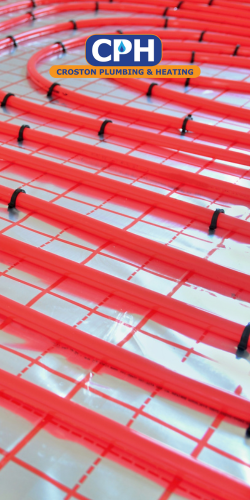
Underfloor heating uses either warm water pipes (hydronic) or electric heating cables installed beneath your floor to heat your home evenly. Unlike radiators, which heat the air around them, underfloor heating warms the entire room from the ground up, giving you consistent comfort throughout.
Why Choose Water (Hydronic) Underfloor Heating?
- Perfect for whole home installations and new builds/extensions
- Runs at lower temperatures, making it extremely efficient
- Pairs perfectly with heat pumps for maximum savings
- Long lifespan with minimal maintenance
Which Water System is Best?
- Screeded Systems – installed within a concrete/screed layer, ideal for new builds
- Overlay Systems – slimline options for renovations without raising floor levels
- Zoned Control Systems – giving each room its own thermostat for tailored comfort
Why Choose Electric Underfloor Heating?
- Ideal for bathrooms, kitchens, and single rooms
- Perfect for retrofit projects where space is limited
- Quick to install with minimal disruption
- Works well under tiles, LVT, and laminate flooring
Which Electric System is Best?
Different homes need different solutions. The main options include:
- Heating Mats – great for large open areas
- Foil Mats – designed for laminate and floating floors
- Loose Wire Systems – flexible for awkward-shaped rooms
Our team can advise which is best for your project.

Our Installation Process
At Croston Plumbing & Heating, we take care of everything:
- Survey & Design – we plan the right system for your property
- Preparation – insulation, levelling, and screeding if needed
- Installation – water pipes or electric mats carefully fitted
- LVT Flooring & Finishes – stylish, durable floors laid over the system
- Testing & Aftercare – ensuring your system works perfectly for years to come
Benefits of Underfloor Heating for North West Homes
- Even heat across the whole room
- Lower running costs compared to radiators
- Luxurious, warm floors all year round
- More wall space, no bulky radiators
- Works with modern renewable energy systems
Cost & Finance Options
The cost depends on room size, system type, and flooring. Many homeowners are surprised at how affordable underfloor heating can be, especially with long-term energy savings.
We also offer finance options, so you can spread the cost of your installation.
Local Areas We Cover
We provide underfloor heating installation across:
- Chorley
- Preston
- Leyland
- Southport
- Ormskirk
- Wigan
- Blackburn
- Surrounding Lancashire areas
Why Choose Croston Plumbing & Heating?
- Local, trusted, family-run business
- Full service – design, & installation
- 5-star rated
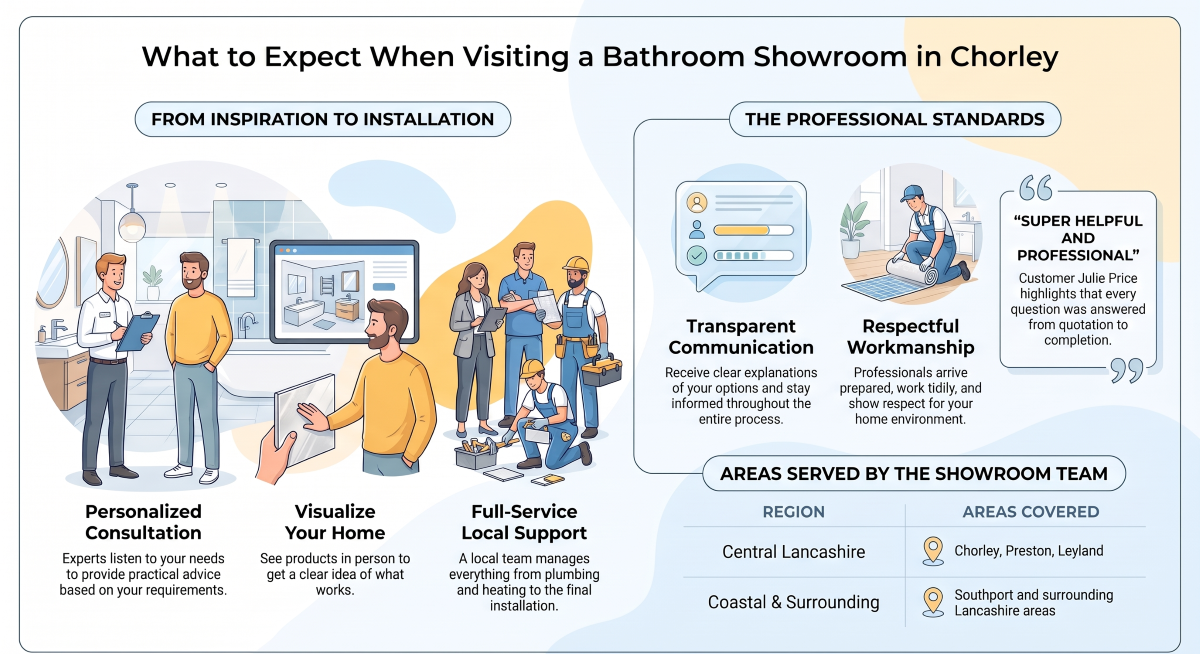
- Experienced showroom team in Chorley
Call to Action
👉 Ready to experience the comfort of underfloor heating?
Contact Croston Plumbing & Heating today for a free consultation.
FAQs: Underfloor Heating
Q: How does underfloor heating actually work?
A: Underfloor heating uses either warm water pipes (hydronic) or electric heating elements (cables or mats) laid beneath your flooring to gently warm the room from the floor up. It radiates heat, warms surfaces and objects, unlike standard radiators which mostly heat the air. Over time, this method gives more even heat distribution and helps avoid cold spots.
Q: What are the pros and cons of water vs electric systems?
A: Water (hydronic) systems are often more cost-effective in the long term for whole-home heating, especially when paired with renewable sources like heat pumps. They require more floor depth and more complex installation. Electric systems are quicker to install, better for smaller rooms or retrofits, but they tend to have higher running costs.
Q: Is underfloor heating going to save me money on bills?
A: Yes, often. The savings depend on insulation, control systems, the source of heat (boiler vs heat pump), and how often and how high the system is run. With good design, underfloor heating can reduce energy usage and make heating more efficient.
Q: What kinds of flooring work best with underfloor heating?
A: Hard surfaces like tile, stone or suitably rated LVT tend to perform best because they conduct heat efficiently. Engineered wood and laminate can also work well if compatible, and there are electric foil systems for floating floors. Thicker carpets reduce efficiency unless they have low tog backing.
Q: Can I install underfloor heating in an older / existing / period house?
A: Yes, but you’ll need to consider floor height, insulation levels, and possibly go for low-profile or overlay systems if you don’t want big changes to doors, thresholds, etc. Proper insulation below the system is especially important.
Q: What temperature should I set underfloor heating to?
A: Typical flow temperatures for hydronic systems are lower than radiators. You may set around 35-45°C for water systems. Room temperature usually around 20- 22°C is comfortable for most living spaces. Thermostats and zoned controls help fine-tune this.
Q: Should I leave my underfloor heating on all the time or use timers / schedules?
A: Using programmable thermostats / timers or smart controls is more efficient. It’s often better to let the system maintain a steady baseline temperature rather than turning it fully off for long periods, which can take more energy to warm back up. Scheduling heat for mornings and evenings can help reduce costs.
Q: Can underfloor heating add value to my home?
A: Yes, many homebuyers see underfloor heating as a luxury/upgraded feature. Even installing it in one or two rooms can help increase appeal and possibly seller or buyer interest.
Q: What maintenance should I expect, and what common problems could occur?
A: Common issues include airlocks (in water systems), thermostat or control faults, leaks, or uneven heating zones. Annual checks, bleeding the system if required, and ensuring manifolds and controls are working properly can help prevent issues.
Q: How much pipework / what layout will I need per square metre?
A: The length of pipe required depends on room size, insulation, heat loss, and the spacing of pipes. Proper design is needed to ensure pipes are spaced to give consistent heat without cold zones. We can do a heat-loss calculation to get this right for your property.
Q: Can I combine underfloor heating with radiators or other heating systems?
A: Absolutely. Many homes use underfloor heating in key rooms (kitchens, bathrooms, extensions) and keep radiators elsewhere. With zoning and controls, you choose which rooms run underfloor heating and which use existing radiators.
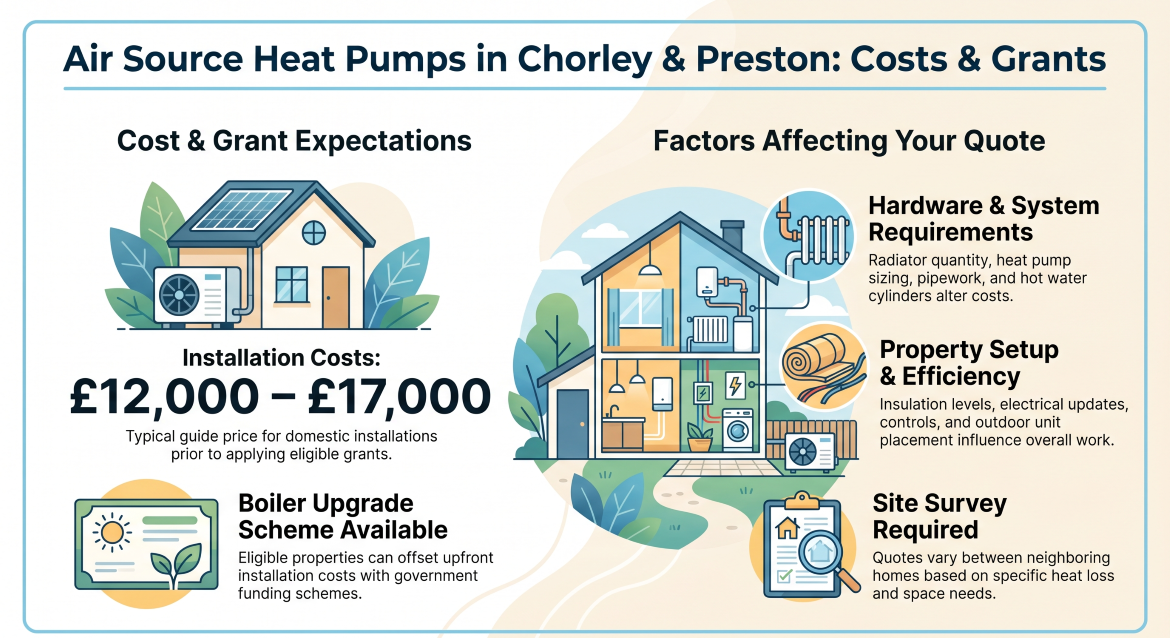
Q: Does underfloor heating work well with renewable energy like heat pumps or solar panels?
A: Yes. Water-based underfloor heating works especially well with heat pumps because they operate better at lower temperatures. Solar panels can also help reduce running costs, particularly for electric underfloor heating when paired with storage or smart controls.
Q: What are low profile / overlay systems and when are they needed?
A: Low profile or overlay systems are thin systems designed for retrofitting. They add only a small height to the floor and are good where floor height is a concern. They avoid major construction or height adjustments.
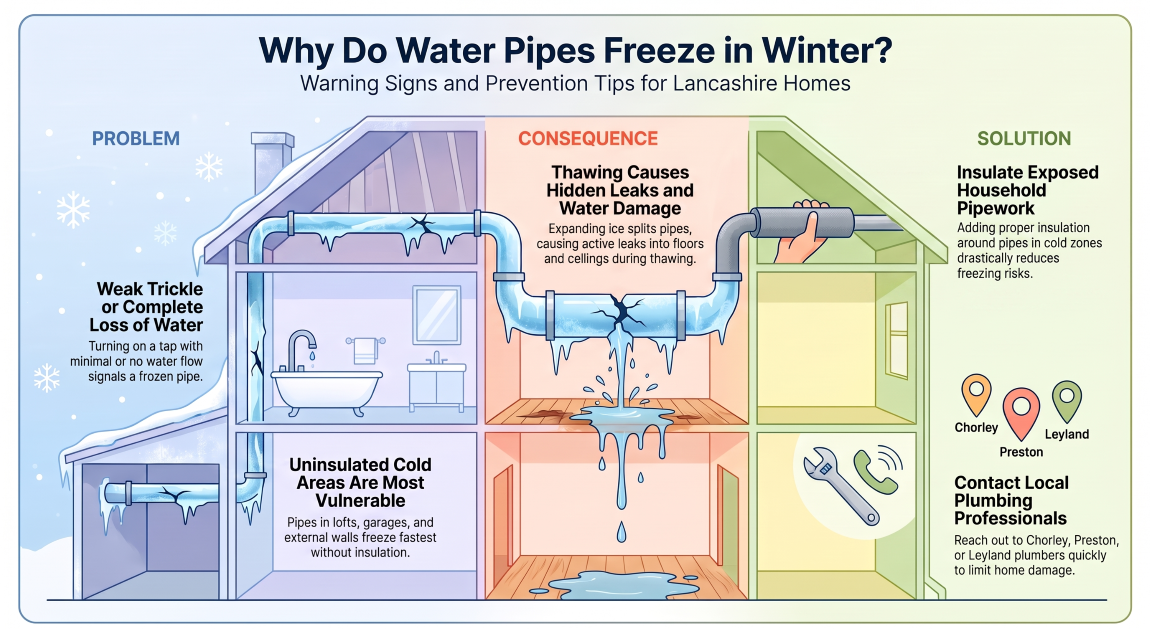
Q: Can underfloor heating pipes freeze in cold weather?
A: While rare, freezing can occur in water-based systems in extreme cold if the system isn’t in use. Many systems include frost protection controls or minimum temperature safeguards to prevent this.