A cold winter morning can bring an unwelcome surprise. You turn on the kitchen tap, expecting water for your morning tea, but only a weak trickle comes out. Perhaps the bathroom tap has stopped working altogether.
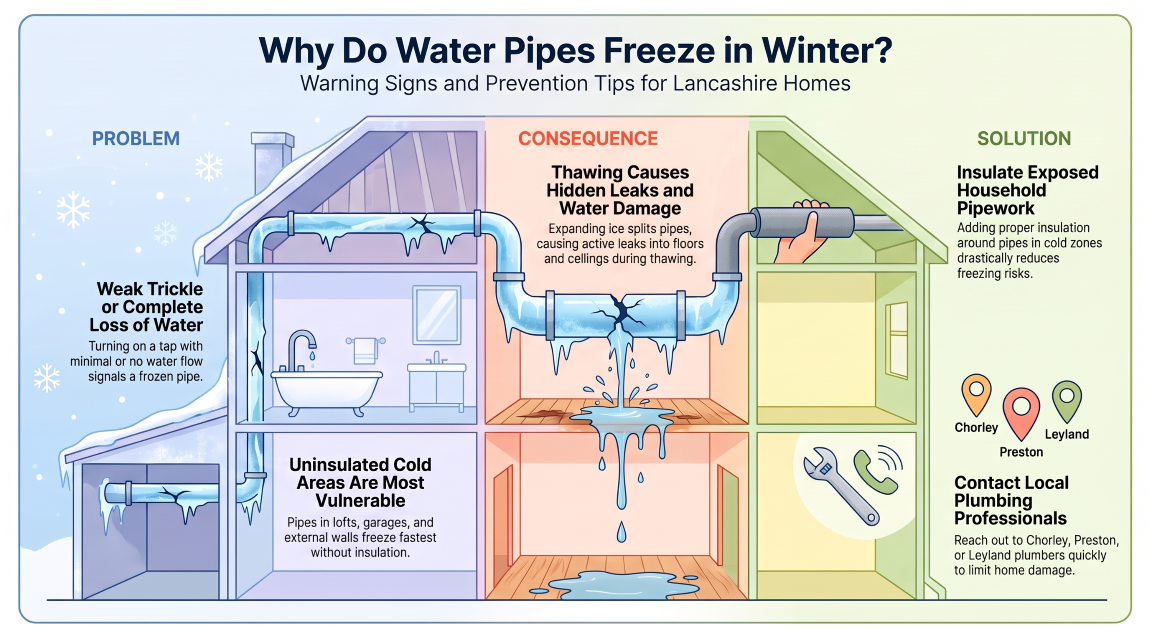
When temperatures drop, frozen water pipes can become a problem in homes across Lancashire. Pipes running through lofts, garages, external walls and other cold areas are particularly vulnerable, especially when they are poorly insulated.
The bigger concern is what happens when the ice begins to thaw. A frozen pipe may have developed a crack or split, allowing water to escape once the blockage clears. What starts as a minor inconvenience can quickly lead to a leak, damaged flooring or a water-stained ceiling.
The good news is that a few sensible precautions can reduce the risk of frozen pipes. Knowing how to recognise the warning signs and respond safely can also help limit damage.
In this guide, we explain why water pipes freeze in winter, which warning signs to look out for, how to protect your home’s plumbing and when to contact a local plumber in Chorley, Preston or Leyland.
Why Do Water Pipes Freeze in Winter?
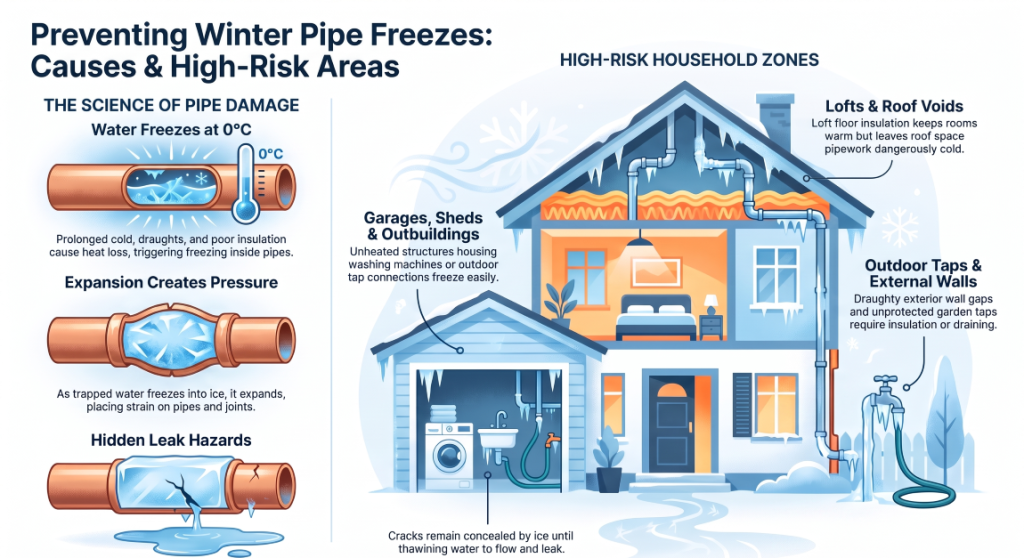
Water freezes at around 0°C under normal conditions. However, the temperature outside does not have to fall to exactly this point for every pipe in your home to be at risk.
Pipes are more vulnerable when exposed to prolonged cold, draughts or inadequate insulation. Water inside a pipe can freeze when the surrounding pipework loses enough heat.
As water freezes, it expands. This can place pressure on the pipe and its joints, potentially causing cracks or splits. The damage is not always immediately visible because ice can temporarily block the affected section. A leak may only become apparent when the ice melts, and water starts flowing again.
Certain areas of a property deserve particular attention during a cold spell.
1. Loft Spaces and Roof Voids
Water pipes running through lofts can be exposed to very low temperatures, particularly when the pipework has little or no insulation.
Insulating your loft floor helps improve energy efficiency, but the roof space itself can remain cold. Water pipes and tanks therefore need suitable protection for the conditions in which they are installed.
2. Garages, Sheds and Outbuildings
Garages and outbuildings are often colder than the main house. If they contain water pipes, washing machine connections or plumbing for an outdoor tap, those sections may be more likely to freeze.
Check exposed pipework in these areas before the first prolonged cold spell.
3. Pipes Near External Walls
Pipes fitted inside or close to external walls can be vulnerable when cold air enters through gaps around doors, windows or service openings.
This can be particularly relevant in older properties where insulation and draught-proofing vary from room to room.
4. Outdoor Taps and Exposed Pipework
Garden taps and their connecting pipes are directly exposed to winter weather. If water remains in an unprotected section, it may freeze during a prolonged cold spell.
A suitable outdoor tap cover, properly insulated pipework, and draining the exposed section where the plumbing arrangement allows can help reduce the risk.
Four Warning Signs That Your Water Pipes May Be Frozen
Recognising a frozen pipe early can help you act before a damaged section causes a leak.
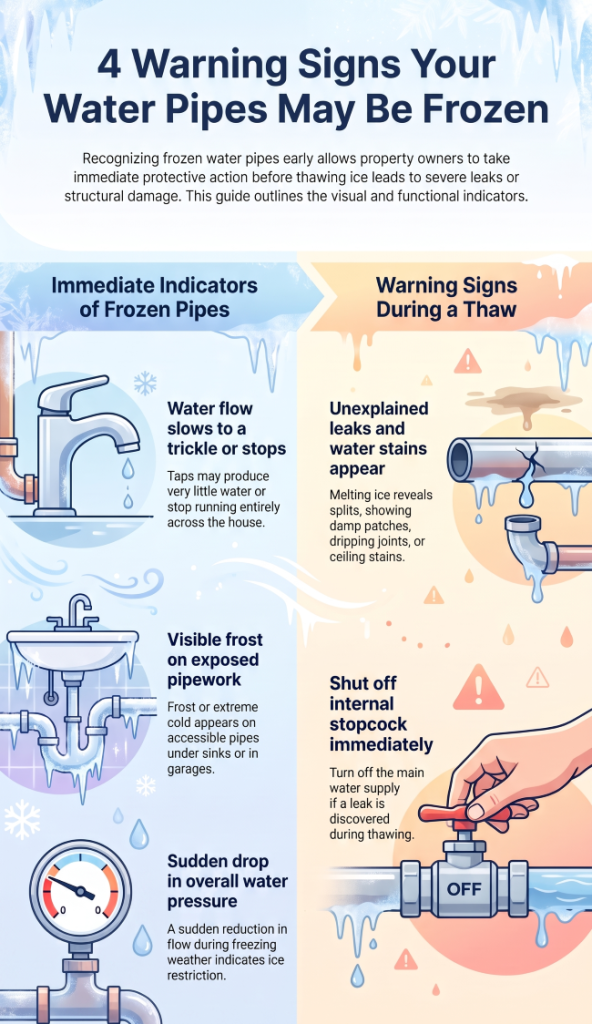
1. Water Is Coming Out of the Tap Slowly or Not at All
One of the most common signs of frozen pipes is a sudden reduction in water flow.
You may find the kitchen tap producing only a trickle or the bathroom tap has stopped running altogether.
2. You Can See Frost on Exposed Pipework
If you can safely access visible pipes under a sink or in a garage, look for frost or unusually cold sections.
Do not dismantle pipework or enter an unsafe loft to investigate. If the suspected frozen section is concealed or difficult to reach, a plumber can help identify the problem.
3. Your Water Flow Suddenly Drops
A sudden drop in water flow during freezing weather can indicate that ice is restricting the water supply.
4. You Notice a Leak When the Weather Warms Up
A pipe can look intact while ice blocks the flow of water. Once the ice melts, water may escape through a split or damaged joint.
Look for damp patches, dripping connections, water stains on ceilings, or unexplained wet areas near pipework.
If you discover a leak, turn off the water supply at your internal stopcock if it is safe to do so. Keep clear of electrical hazards and arrange a repair promptly.
How to Prevent Frozen Water Pipes in Your Home
You do not need to wait for a weather warning to prepare your plumbing. These practical steps can help protect vulnerable pipes before temperatures fall.
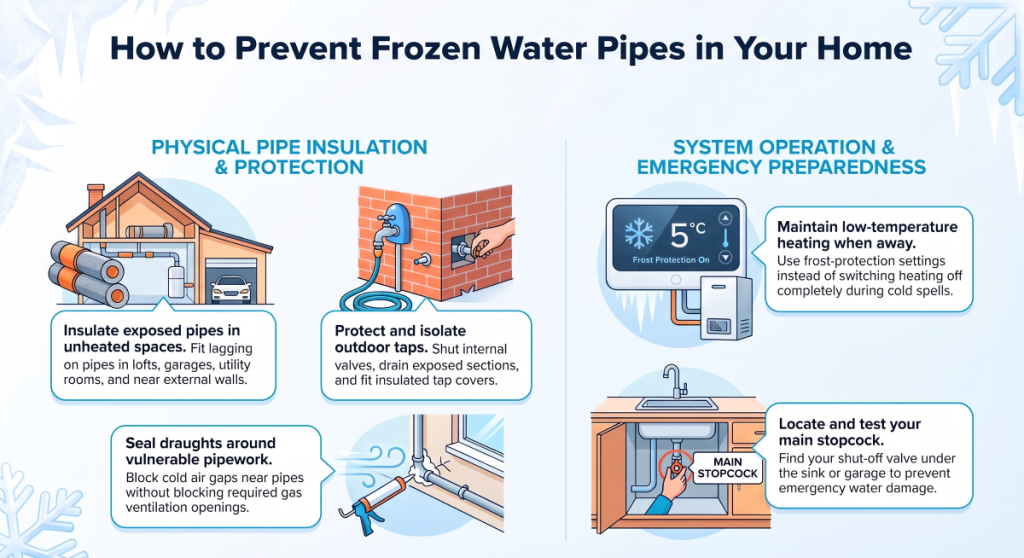
1. Insulate Exposed Pipes Properly
Pipe insulation, often called pipe lagging, is one of the simplest ways to reduce the risk of freezing.
Pay particular attention to pipes in:
- Loft spaces and roof voids.
- Garages and outbuildings.
- Unheated cupboards and utility rooms.
- Areas close to external walls.
- Exposed sections supplying outdoor taps.
Choose insulation suitable for the pipe and its location, making sure joints and bends are covered properly. Outdoor pipework may need insulation specifically designed for exposed conditions.
Pipe lagging reduces heat loss, but it cannot guarantee that pipes will never freeze during severe weather.
2. Protect Outdoor Taps Before Winter
Outdoor taps and their connecting pipes are often overlooked until a cold spell arrives.
If your outdoor tap has an internal isolation valve, follow the manufacturer’s instructions to shut off the supply and drain the exposed section where the plumbing arrangement allows this. An insulated tap cover can provide additional protection.
If you are unsure how your outdoor tap is connected, ask a plumber to check it rather than operating unfamiliar valves.
3. Keep Your Home Adequately Heated
During cold weather, avoid switching off your heating without considering the risk of frozen pipes. If your heating system has a low-temperature or frost-protection setting, use it according to the manufacturer’s guidance.
For advice on maintaining your home’s heating system, explore our central heating services.
If you plan to be away for an extended period, consider seeking professional advice about protecting your plumbing and whether shutting off the water supply is appropriate for your property.
4. Seal Draughts Around Vulnerable Pipework
Cold air entering through gaps around external doors, windows or service openings can make nearby pipes more vulnerable.
Where appropriate, seal draughts and ensure exposed pipework has suitable insulation. Avoid blocking required ventilation openings or making changes that could affect the safe operation of gas appliances.
5. Find Your Main Stopcock Before an Emergency
Do you know where your home’s internal stopcock is?
It is commonly found under the kitchen sink, although it may be located in a utility room, cupboard, garage or another accessible area.
The stopcock controls the water entering your home. If a pipe bursts, shutting it off promptly can help limit water damage.
Locate it before winter and check that it operates correctly. If it is seized or difficult to turn, arrange for a plumber to inspect it.

What Should You Do If You Think a Water Pipe Is Frozen?
If a tap stops running during a cold spell, check for a frozen pipe and avoid forcing water through the blockage.
Step 1: Check Whether the Problem Affects Your Whole Home
Try another tap and ask a neighbour whether their water supply is working. If several properties are affected, check your water supplier’s updates.
Step 2: Check for Leaks and Turn Off the Water if Necessary
Look for visible leaks around accessible pipes. If a pipe has burst, turn off your internal stopcock if safe. Keep clear of wet electrical equipment and flooded areas.
Step 3: Thaw an Accessible Frozen Pipe Gently
Use a warm towel or hot water bottle to apply gentle warmth. Never use a blowtorch, naked flame or boiling water. Contact a plumber if the pipe is concealed or difficult to access.
Step 4: Check for Leaks as the Water Returns
Inspect accessible pipework as the ice melts. If you notice a leak, turn off the water supply and arrange a repair. If the water supply does not return, contact your water supplier or a qualified plumber.
What Should You Do If a Frozen Pipe Bursts?
A burst pipe needs prompt attention because water can spread quickly through ceilings, floors, cupboards, and walls.
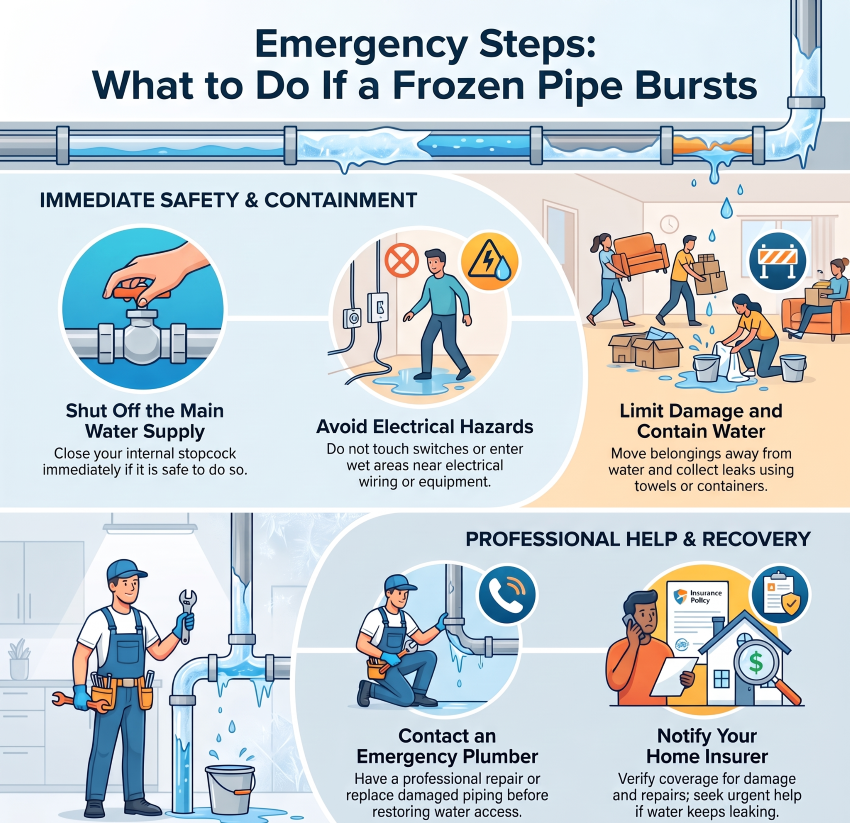
If you discover a burst pipe, follow these steps:
- Turn off the water. Close your internal stopcock if you can do so safely.
- Stay clear of electrical hazards. If water is near electrical equipment or wiring, do not touch the equipment or enter a wet area to reach a switch. Only isolate electricity if you can do so safely.
- Limit further damage. Move belongings away from the water if it is safe, and collect escaping water with towels or containers where practical.
- Contact a plumber. A damaged pipe may need repairing or replacing before the water supply can be restored safely.
- Contact your insurer. Check your home insurance policy to understand whether the damage and necessary repairs are covered.
If water continues to escape after you have shut off the stopcock, keep clear of the affected area and seek urgent professional assistance.
For help with burst pipes and plumbing leaks, visit Croston Plumbing & Heating’s emergency plumbing service in Chorley. Check the service page for the areas covered and the current availability of emergency assistance.
Frozen Water Pipes or a Frozen Boiler Condensate Pipe: What’s the Difference?
These two problems are easy to confuse, but they affect different parts of your home.
A frozen domestic water pipe can restrict or stop the water supply to your taps. If the pipe is damaged, it may leak when the ice melts.
A frozen boiler condensate pipe affects the wastewater produced by a condensing boiler. When the condensate pipe freezes, the boiler may stop operating and display a fault code or make gurgling noises.
The symptoms and solutions are different, so identifying which pipe may be affected is important.
If your boiler has stopped working during freezing weather, read our guide to frozen boiler condensate pipes for further advice. If your boiler continues to experience problems, our boiler servicing and repair team can help identify the issue and advise on the next steps.
When Should You Call a Plumber?
Some frozen pipes can be thawed safely when the affected section is accessible. Others require professional attention, particularly when the pipe is hidden or there is a risk of a burst.
Contact a qualified plumber if:
- A pipe has split, burst or started leaking.
- Water is coming through a ceiling, wall or floor.
- You cannot locate the frozen section.
- Your water supply does not return after safe thawing.
- Your stopcock is seized or does not shut off the supply.
- You suspect a concealed leak or damage to pipework.
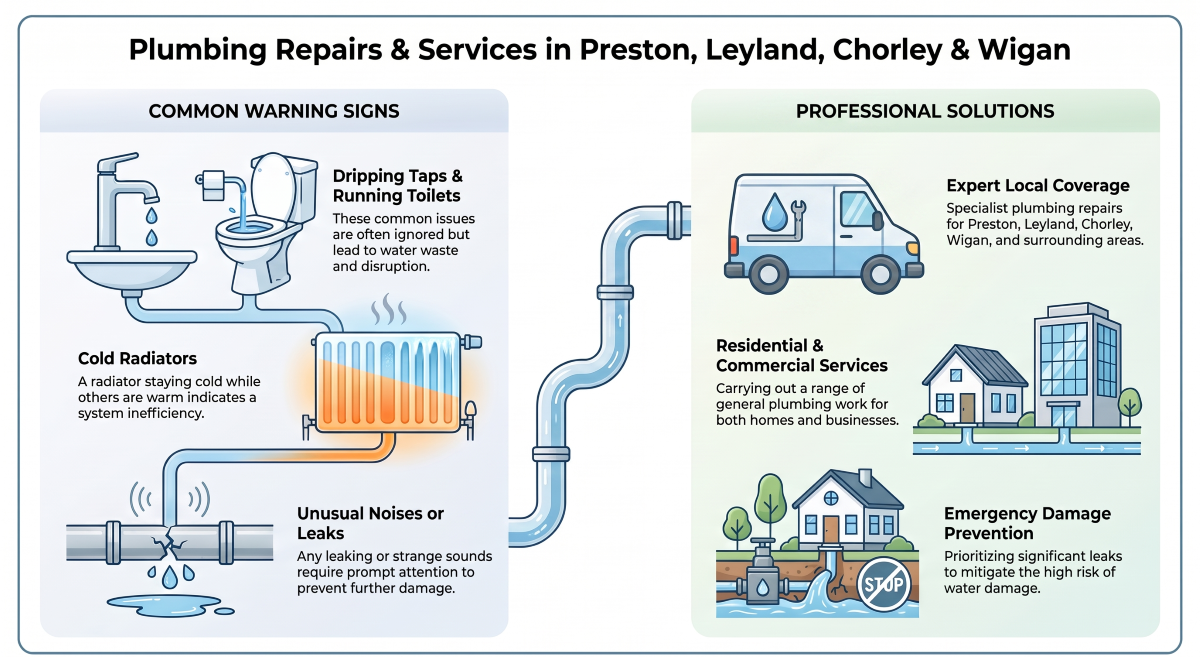
If you live in Chorley, Preston, Leyland, or the surrounding Lancashire areas, Croston Plumbing & Heating provides plumbing services, including plumbing repairs.
Visit the plumbing and heating services page to find out more, or contact the team to discuss your requirements.
Frequently Asked Questions About Frozen Water Pipes
At What Temperature Do Water Pipes Freeze in a House?
Water freezes at around 0°C under normal conditions, but pipes do not all freeze at the same outdoor temperature. The risk depends on how long the cold lasts, the pipe’s location, insulation, draughts and other conditions.
Exposed or poorly insulated pipes can be vulnerable during prolonged freezing weather, even when other plumbing inside the house remains unaffected.
How Can I Tell If My Water Pipes Are Frozen?
Common signs include a tap producing only a trickle, no water coming from one or more taps, visible frost on accessible pipework, or a sudden loss of water flow during a cold spell.
These symptoms can also indicate a supply interruption or another plumbing problem. Check whether neighbouring properties have water and contact your water supplier if you suspect a wider issue.
How Do I Defrost a Frozen Water Pipe Safely?
If the frozen section is accessible and safe to approach, use gentle warmth such as a warm towel or hot water bottle. Avoid electrical heating equipment if the area is damp or there is a risk of contact with water.
Never use a naked flame, blowtorch or boiling water. If the pipe is concealed, damaged or difficult to access, contact a plumber.
Will a Frozen Pipe Always Burst?
No. Some pipes thaw without damage, but freezing can put pressure on pipework and joints. A crack may only become apparent once the ice melts and water begins to escape.
After thawing, check accessible pipework for leaks. If you discover damage, turn off the water and arrange a repair.
Where Is the Main Stopcock in a UK House?
The internal stopcock is commonly located under the kitchen sink, but it can also be found in a utility room, cupboard, garage or another accessible location.
It is worth locating it before winter and checking that it operates correctly. If it is seized or difficult to turn, ask a plumber to inspect it.
Who Should I Contact If My Water Supply Stops During Freezing Weather?
First, check whether your neighbours have water and look for supply interruption updates from your water company.
If neighbouring properties also have no water, the issue may be with the wider network. If the problem appears to affect only your property, a frozen or damaged private pipe may be responsible.
Does Home Insurance Cover Frozen or Burst Pipes?
Some home insurance policies cover damage caused by water escaping from burst pipes, but exclusions and conditions vary between insurers.
Check your policy wording, particularly any requirements relating to heating, property inspections or leaving a home unoccupied during winter. Contact your insurer if a pipe bursts or you discover water damage.
Can I Prevent Frozen Pipes While I Am Away in Winter?
You can reduce the risk by insulating vulnerable pipes, protecting outdoor taps and keeping your property at an appropriate temperature using the heating system’s recommended settings.
If you will be away for an extended period, seek advice on whether shutting off the water supply is suitable for your property and heating system.
Who Can Repair a Burst Water Pipe in Chorley, Preston or Leyland?
Croston Plumbing & Heating provides plumbing repairs and emergency plumbing services in Chorley and surrounding areas. Check the company’s service information to confirm coverage for your particular location and the availability of urgent assistance.
If a pipe has burst, turn off the water supply if safe to do so, keep clear of electrical hazards and contact a plumber for advice and repair arrangements.
Protect Your Home From Frozen Pipes This Winter
Frozen water pipes can cause disruption, but preparing ahead can help reduce the risk. Check exposed pipework, insulate vulnerable sections, protect outdoor taps, and make sure you know where your stopcock is located.
If your water supply suddenly stops during freezing weather, investigate the cause carefully and avoid using unsafe methods to thaw the pipe. A frozen pipe may not always burst, but checking for leaks as the ice melts is important.
If you discover a burst pipe or cannot resolve the problem safely, professional help can prevent further damage and get your plumbing back to normal.
For plumbing repairs or emergency assistance in Chorley, Preston, Leyland and surrounding Lancashire areas, contact Croston Plumbing & Heating to discuss your requirements.
Don’t wait for a small plumbing problem to turn into a bigger repair. Preparing your home before the cold weather arrives can make all the difference.