You’ve booked your winter break, the bags are nearly packed and then you remember one important question: should you switch your boiler off before leaving home?
It’s understandable. Nobody wants to spend money heating an empty house, but nobody wants to return from holiday to find a burst pipe or a boiler that has stopped working.
During colder weather across Chorley, Preston, Leyland and the surrounding areas, leaving a property empty can increase the risk of frozen pipes and heating problems. A few checks before you leave can help protect your home and reduce the chances of an unexpected repair.
The right approach depends on your boiler, heating controls, how long you’ll be away and how cold the weather is expected to get.
Quick Answer: Should You Turn Your Boiler Off Before Going on Holiday?
For a short winter break, it’s generally best not to switch your boiler off completely without checking its frost protection arrangements first.
Here are the main points to remember:
- For a short trip: Keep the boiler powered if you need its frost protection to operate, and use an appropriate low heating or holiday setting recommended by the manufacturer.
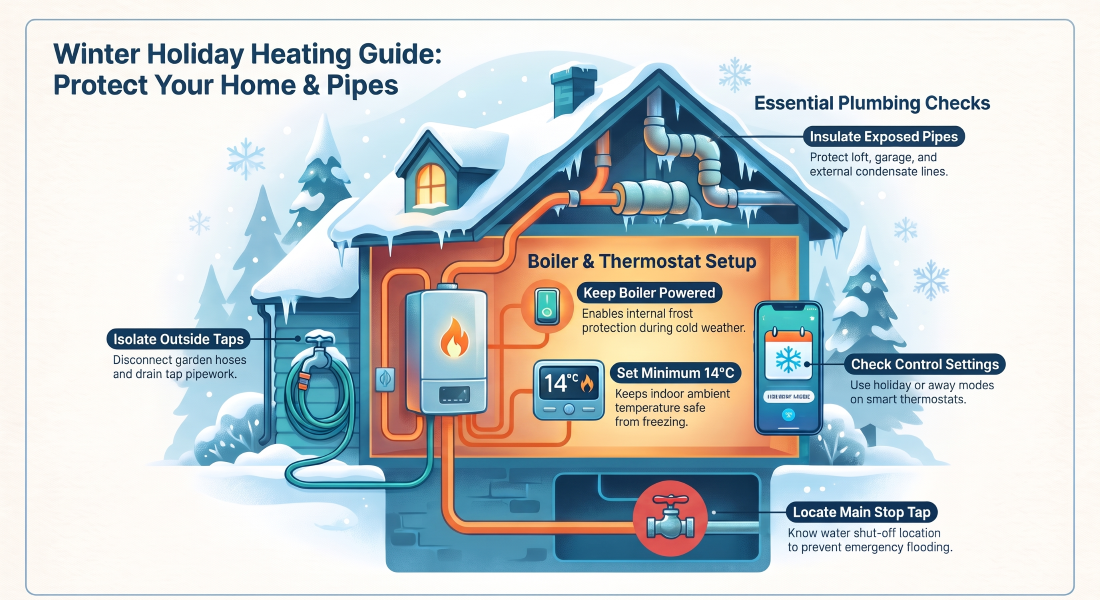
- Heating temperature: WaterSafe recommends keeping your heating at least 14°C overnight and while you’re away to help reduce the risk of frozen pipes.
- Frost protection: A boiler’s built-in frost protection does not necessarily protect every pipe throughout your property.
- For a longer absence: Speak to a plumber or heating engineer about the best way to protect your plumbing and heating system.
Let’s look at what you should check before leaving.
Should You Leave Your Boiler On While You’re Away?
If you’re going away during winter, don’t automatically switch your boiler off without considering the risk of freezing.
Many modern boilers include a built-in frost protection function. Depending on the model, the boiler may activate when its internal temperature falls below a certain level to help protect its components.
However, this doesn’t mean your entire home is protected. Pipes running through lofts, garages, cupboards and other unheated spaces may still be vulnerable to freezing.
For a short winter holiday, a sensible approach is usually to leave the boiler powered and use an appropriate low heating or frost protection setting, following the manufacturer’s instructions.
If you’re planning to leave your property empty for several weeks, additional precautions may be necessary.
If you’re unsure whether your heating system is set up correctly, our team can help with central heating services and advice on keeping your home warm and protected during winter.

What Happens If You Turn Your Boiler Off Completely?
Switching your boiler off might seem like an easy way to save money while nobody is home. However, during particularly cold weather, it can create problems.
When the heating is switched off, the temperature inside your property can gradually fall. If it becomes cold enough, water inside exposed pipes may freeze and expand.
This can put pressure on the pipework and joints, potentially causing cracks or splits. The damage may not become obvious until the ice melts and water starts leaking.
Possible problems include:
- Frozen pipes in lofts, garages and other unheated areas.
- Cracked or burst water pipes.
- Damage to plumbing connections and fittings.
- Loss of heating or hot water when you return.
- Unexpected repair costs and water damage.
Rather than turning everything off automatically, check whether your boiler has a suitable frost protection or holiday setting.
How Does Boiler Frost Protection Work?
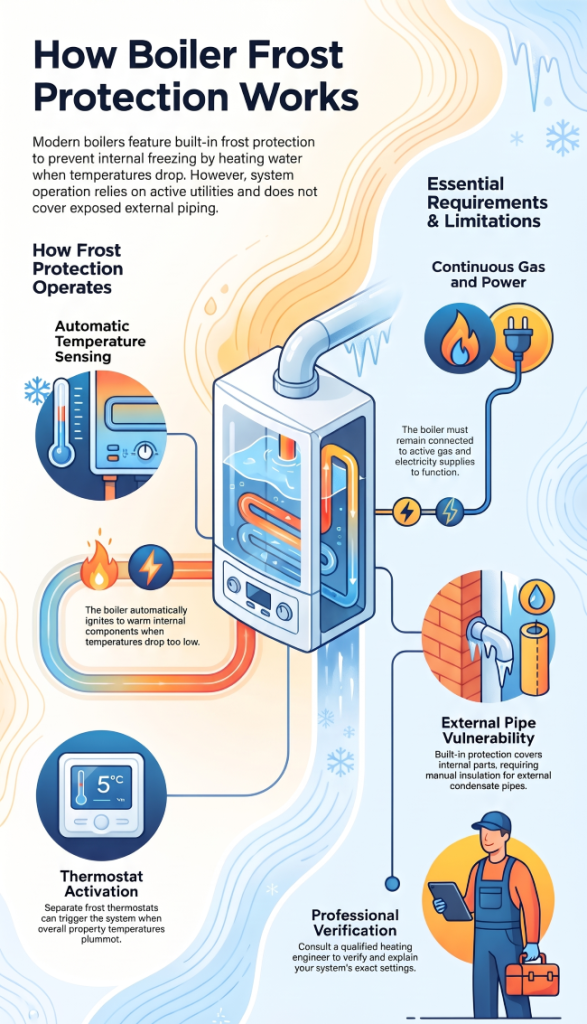
Many modern boilers have a built-in frost protection function designed to help prevent the boiler from freezing.
If the temperature inside the appliance drops below a certain level, the boiler may activate to warm the water within its components. Some heating systems also have a separate frost thermostat that can activate the heating when the temperature in the property becomes too low.
The exact operation varies between boilers and heating systems, so check your instruction manual before relying on this feature.
A few things to remember:
- The boiler generally needs to remain connected to its electricity supply.
- The gas supply must remain available if the boiler needs to fire.
- The frost protection function must be enabled and working correctly.
- Built-in protection may only cover the boiler or parts of the heating circuit.
- Exposed household water pipes and external condensate pipes may still need additional protection.
If you’re unsure whether your boiler’s frost protection is working correctly, consider arranging a professional boiler service and inspection before going away.

Don’t Forget the Boiler Condensate Pipe
If you have a modern condensing boiler, it will have a condensate pipe that carries wastewater away from the appliance. Depending on the installation, this pipe may run to an internal waste connection or an outside drain.
An exposed section can freeze during very cold weather. If ice blocks the pipe, the boiler may stop operating and display a fault code, leaving you without heating or hot water.
Before leaving home:
- Check that any exposed condensate pipe has suitable, weather-resistant insulation.
- Look for visible signs of damage or poorly fitted insulation.
- If you already have problems with a condensate pipe freezing, arrange for a heating engineer to investigate before travelling.
Don’t attempt to alter or reposition the condensate pipe yourself. Any changes should be carried out by a qualified heating engineer in accordance with the boiler manufacturer’s instructions.
If your boiler stops working because of a frozen condensate pipe, read our guide on how to defrost a frozen boiler condensate pipe. It explains what can cause the blockage and how to deal with the problem safely.
What Temperature Should You Leave Your Heating On?
There isn’t one temperature setting that suits every property. It depends on your home’s insulation, the location of your pipes, your heating system and how cold the weather is likely to get.
WaterSafe recommends keeping your heating at least 14°C overnight and when you’re away from home to help reduce the risk of frozen pipes.
This is general guidance rather than a guarantee that every pipe will be protected. Homes with poor insulation or exposed pipework may need additional precautions.
Before leaving:
- Check your thermostat and heating programmer.
- Use a suitable low-temperature setting rather than switching the heating off completely.
- Check whether your smart thermostat has an away or frost protection setting.
- Make sure your heating schedule covers the whole period you’re away.
- Follow the recommendations in your boiler manual and home insurance policy.
Remember that boiler frost protection and maintaining a suitable temperature throughout your home are not the same thing. The boiler’s built-in setting may not keep every room or vulnerable pipe warm enough.

Should You Leave Your Hot Water On?
This depends on the type of boiler and hot water system you have.
If you have a combi boiler: Hot water is generally heated when you open a tap, so there is usually no separate hot water cylinder that needs to be kept heated while you’re away.
If you have a system or conventional boiler: You may have a hot water cylinder with separate controls and heating schedules. Your programmer may have a holiday setting that allows you to reduce unnecessary heating while keeping suitable frost protection active.
Check your manufacturer’s instructions before changing any settings. If you’re unsure how your hot water controls work, ask a heating engineer for advice.

Quick Pipe Checks Before You Go
Leaving your heating on appropriately is only one part of preparing your home for winter. It’s also worth checking your plumbing before setting off.
Insulate Exposed Pipes
Pipes running through lofts, garages, outbuildings and other unheated spaces are more vulnerable to freezing.
Check that exposed pipework has suitable insulation and replace any damaged or missing sections. Pay particular attention to pipes near external walls and areas exposed to draughts.
Check Your Outside Tap
Outside taps and garden pipework can be vulnerable during freezing weather.
Disconnect garden hoses and, if your outside tap has an isolation valve, follow the manufacturer’s or plumber’s instructions to isolate and drain the exposed section where appropriate.
An insulated outside tap cover can provide additional protection.
Know Where Your Main Stop Tap Is
Before going away, make sure you know where your main stop tap is and how to turn it off.
It’s commonly found under the kitchen sink, although it may be in a utility room, cupboard or garage.
Knowing how to shut off the water supply can help limit damage if a pipe develops a leak or bursts.
Whether you should turn off the incoming water supply while you’re away depends on your plumbing and heating arrangement. If you’re unsure, ask a plumber for advice.
Check for Existing Leaks
A small drip from a tap or a minor leak around a pipe connection might not seem urgent, but leaving it unattended can lead to bigger problems.
Check underneath sinks, around toilets, near washing machines and around visible pipework.
It’s worth arranging repairs before leaving rather than returning to an avoidable plumbing problem.
Ask Someone to Check Your Property
If possible, arrange for a trusted neighbour, friend or family member to check your home while you’re away.
They can look for signs of leaks, heating problems or other issues that may need attention.
It’s also worth leaving them your contact details and showing them where the main stop tap is located.
If you notice leaks, damaged pipework or other plumbing problems before travelling, professional plumbing services in Chorley can help you get them sorted before you leave.

What If You’re Going Away for Several Weeks?
Leaving your home empty for a few days is different from leaving it unoccupied for several weeks.
For a longer winter absence, WaterSafe advises considering turning off the water supply and draining the plumbing system. However, the right approach depends on your property’s plumbing and heating arrangement.
Before travelling, speak to a qualified plumber or heating engineer about whether you should:
- Check the boiler’s frost protection settings.
- Insulate vulnerable pipework.
- Review the heating controls and timer.
- Isolate the incoming water supply.
- Drain the domestic plumbing system where appropriate.
Don’t attempt to drain your heating system or make changes to boiler pipework without professional advice. A sealed central heating circuit is different from the domestic water supply, and the correct arrangements depend on the system.
Check your home insurance policy too. Some policies have specific conditions for properties left unoccupied for extended periods, including requirements for heating, water supplies or regular property checks.
For more practical advice on protecting your pipework, read our guide on why water pipes freeze in winter and how to prevent it.
Your Pre-Holiday Heating Checklist
Before heading off, run through this simple checklist:
- Check that your boiler is working properly.
- Read the manufacturer’s guidance on frost protection.
- Set your heating controls appropriately.
- Check that exposed pipes are properly insulated.
- Check the external section of your condensate pipe, if fitted.
- Disconnect garden hoses and check outside taps.
- Repair any dripping taps or visible leaks.
- Locate your main stop tap.
- Check your home insurance requirements.
- Arrange for someone to check your property if possible.
Taking these steps can help reduce the risk of winter plumbing and heating problems while you’re away.
When Should You Book a Boiler Service?
If your boiler hasn’t been serviced recently, it’s worth arranging an appointment before the coldest part of winter.
A boiler service gives a Gas Safe registered engineer an opportunity to inspect the appliance, check its operation and identify potential problems.
It’s also a useful opportunity to ask about frost protection, heating controls and whether your current system is suitable for periods when the property is empty.
Regular servicing in line with the manufacturer’s recommendations can help keep your heating system operating safely and efficiently.
If you notice unusual noises, pressure problems, leaks or repeated heating faults, don’t ignore them. Arrange for a qualified engineer to investigate.
Find out more about our Boiler Servicing & Repairs service if your boiler is due for its annual check.
Frequently Asked Questions
Should I switch my boiler off when going on holiday in winter?
Generally, it’s better not to switch your boiler off completely during freezing weather without considering frost protection. Check your boiler manual and use an appropriate heating or holiday setting to help protect your system.
Can I leave my boiler on while I'm away?
Yes. Many homeowners leave their boilers powered during winter trips so that frost protection can operate where fitted. Make sure the necessary electricity and gas supplies remain available and follow your manufacturer’s instructions.
Does boiler frost protection stop all pipes from freezing?
No. Built-in frost protection usually protects the boiler or parts of its heating circuit. It may not protect pipes in lofts, garages, outside walls or other unheated areas. Suitable insulation and additional precautions may still be necessary.
What temperature should I leave my house at during a winter holiday?
There is no single setting that suits every home. WaterSafe recommends keeping heating at least 14°C overnight and when you’re away to help reduce the risk of frozen pipes. Also consider your property’s insulation, exposed pipework and any specific insurance requirements.
Should I turn off the water supply before going on holiday?
For some properties, turning off the incoming water supply can reduce the risk of water damage if a pipe leaks. However, the right approach depends on your plumbing and heating system. Ask a plumber if you’re unsure, particularly if your boiler or other equipment needs a particular water supply arrangement.
Should I leave my heating on if I have a smart thermostat?
A smart thermostat can make it easier to manage your heating remotely. Some models include an away or frost protection setting. Check the manufacturer’s instructions and make sure the thermostat and boiler remain powered and connected.
Can my boiler condensate pipe freeze while I'm on holiday?
Yes. The exposed section of a condensate pipe can freeze during very cold weather. If it becomes blocked, your boiler may stop operating and display a fault code. Suitable insulation can help reduce the risk of freezing.
What should I do if my pipes freeze while I'm away?
If you return to find frozen pipes, check for signs of a leak. If a pipe has burst or is leaking, turn off the water at the main stop tap if it is safe to do so and contact a qualified plumber. Never use a naked flame or blowtorch to thaw frozen pipes.
Do I need a boiler service before going on holiday?
A holiday doesn’t automatically mean you need a boiler service. However, if your annual service is due, arranging it before winter is a sensible precaution. It also gives you an opportunity to discuss frost protection and heating settings with an engineer.
Getting Your Heating Ready for Winter in Chorley, Preston and Leyland
Going away should be something to look forward to, not something that leaves you worrying about your boiler and pipes.
A few simple checks before you leave can help reduce the risk of frozen pipes, heating faults and unexpected repairs. If you’re unsure about your boiler’s frost protection settings or how to prepare your plumbing for a longer absence, getting professional advice is worthwhile.
Croston Plumbing & Heating has been serving homeowners across Chorley, Preston, Leyland, Wigan and surrounding Lancashire areas since 2006. Our team is Gas Safe registered and Worcester Bosch accredited.
Whether you need a boiler service, help with a heating problem or advice on protecting your pipework during winter, we’re here to help.
Planning a winter holiday? Get your heating system checked before you go.
Call Croston Plumbing & Heating on 01257 452 879 or WhatsApp 07498 318394 to discuss your plumbing and heating requirements.